
When you’re shopping for a new wallet, phone case, or piece of furniture, you’ll inevitably face the big question: genuine leather vs faux leather? The best choice depends on your priorities: genuine leather offers unparalleled durability and develops a beautiful patina over time, while faux leather is the winner for affordability and animal-friendliness. But the differences go far beyond cost and ethics.
Let’s break down everything you need to know about these two popular materials so you can choose the one that’s right for you.
What is Genuine Leather?
Here’s a common misconception: the term “genuine leather” means it’s the best quality. In reality, while it is real animal hide, it’s often one of the lower grades.
Genuine leather typically comes from the layers of the hide that are left after the top grain, the strongest part, has been split off. These lower layers are often treated, sanded, and embossed with a grain pattern to mimic the appearance of higher quality leather. You’ll find it in many budget friendly belts, shoes, and accessories. So, while it is technically real leather, it lacks the durability, breathability, and rich character of premium grades like full grain or top grain leather.
What is Faux Leather (or Vegan Leather)?
Faux leather is the umbrella term for any material designed to look and feel like leather without using animal products. You might see it called vegan leather, synthetic leather, leatherette, or pleather.
Instead of animal hide, faux leather is made from a plastic polymer coated onto a fabric backing. This makes it a popular choice for those seeking a cruelty free option. However, it’s important to remember that “vegan leather” is primarily a marketing term. It doesn’t automatically mean the product is eco friendly.
PU Leather (Polyurethane)
PU leather is a modern type of synthetic leather made by coating a fabric base with flexible polyurethane. It’s generally softer, more pliable, and more breathable than older types of faux leather. This makes it a go to for fashion items like jackets and bags where a soft touch is desired. Newer water based manufacturing methods have also significantly reduced the toxic emissions associated with its production.
PVC Leather (Polyvinyl Chloride)
PVC leather, also known as vinyl, is an older and often cheaper form of faux leather. It’s made by layering PVC and plasticizers over a fabric backing. PVC is extremely durable and water resistant, making it great for things like boat upholstery or restaurant seating. The trade offs are significant, though. It’s stiff, non breathable (that sticky feeling on a hot day), and its production and disposal can release harmful toxins like dioxins.
Durability: A Key Difference in Genuine Leather vs Faux Leather
When it comes to longevity, there’s a clear winner. High quality real leather is exceptionally durable and can last for decades with proper care. It “wears in” rather than wearing out, often becoming softer and more comfortable over time.
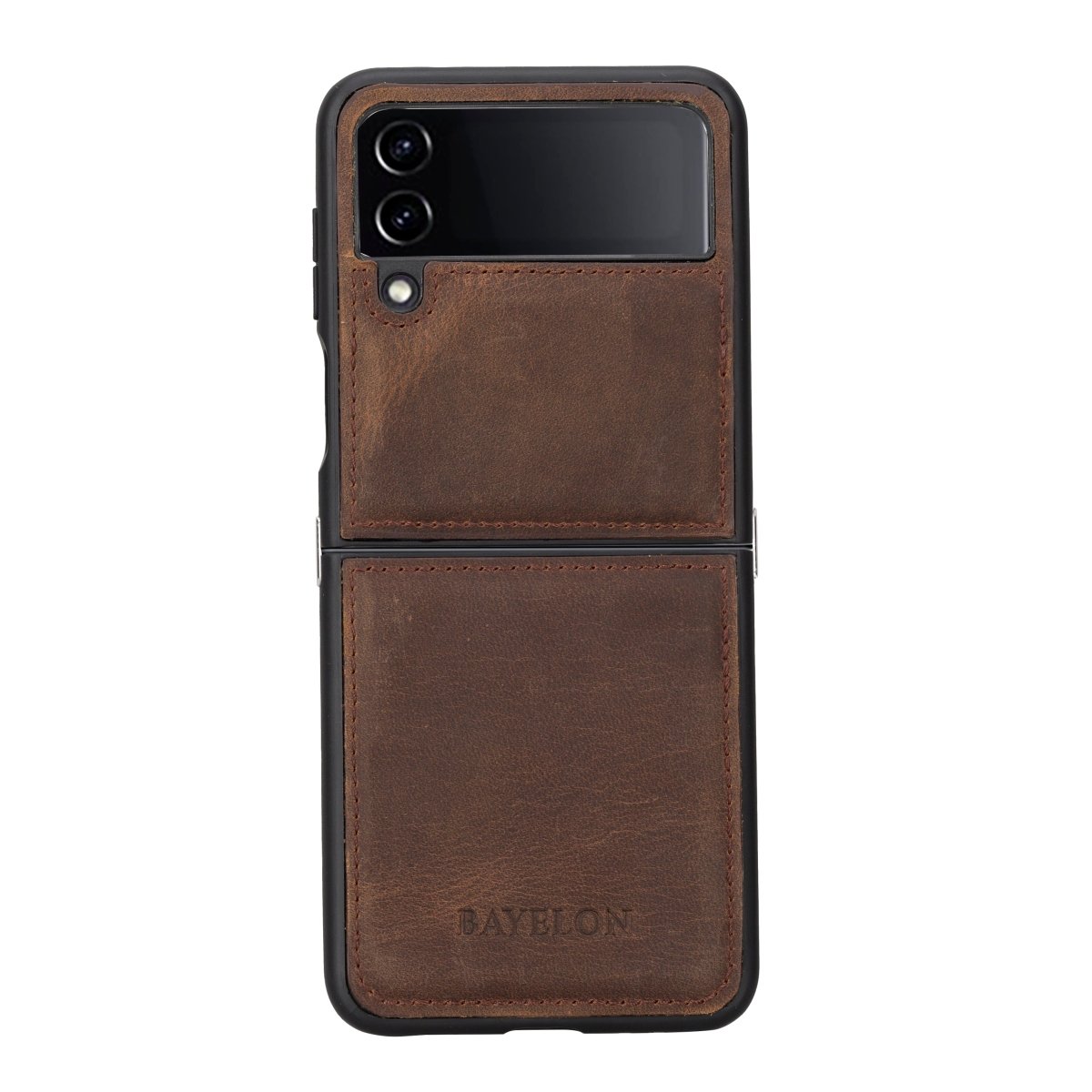
Faux leather, on the other hand, has a much shorter lifespan. The plastic coating can begin to crack, flake, or peel after just a few years of regular use. While some higher quality synthetics might last around five years, they simply lack the natural fiber strength of real hide. Once faux leather starts to delaminate, it’s usually impossible to repair. This is why brands that prioritize longevity, like Bayelon, craft their accessories from full grain leather. For example, the iPhone 17 Pro Max detachable wallet case is built to withstand daily use far longer than its plastic counterpart, offering better value in the long run.
Breathability and Comfort
One of leather’s unsung heroes is its breathability. As a natural, porous material, real leather allows air and moisture to pass through. This is why leather shoes keep your feet more comfortable and a leather jacket feels less clammy than a synthetic one. It helps regulate temperature and wicks away moisture.
Faux leather is essentially plastic, making it far less breathable. PVC is completely non porous, trapping heat and sweat against your skin. While PU leather is slightly better, it still can’t match the natural airflow of genuine animal hide. If comfort is a priority, the genuine leather vs faux leather debate leans heavily in favor of real leather.
Appearance and Patina: How They Age
Real leather has a unique, organic beauty. No two hides are exactly alike, with natural variations in grain, scars, and texture that give each piece character. Faux leather, being machine made, has a uniform, repeating pattern that can look artificial up close.
The most magical quality of real leather, however, is the way it ages. Over time, it develops a patina, a beautiful sheen and deepening of color that comes from handling, sunlight, and daily life. This patina tells a story and is a hallmark of a well loved, high quality product. Faux leather doesn’t develop a patina. It simply degrades, with its aging process marked by unattractive cracks and peeling.
This is something we see in everyday items. A Bayelon full grain leather phone case will evolve with you, gaining a unique vintage character over months and years of use. A plastic case, in contrast, just gets old.
Price Comparison: The Cost of Quality
There’s no getting around it: real leather is more expensive. Sourcing and processing animal hides is a labor intensive process. A surprising fact is that up to 30% of a hide can be discarded due to natural imperfections, adding to the material cost.
Faux leather is mass produced from petrochemicals in factories, a much cheaper and more efficient process. To give you an idea of the gap, genuine leather can cost between $15 and $30 per square meter, while PU and PVC leather might only cost $2 to $6.
However, consider the long term value. A single leather product can outlast several faux leather ones, potentially saving you money over time by reducing the need for frequent replacements. If you’re on Android, explore Samsung Galaxy S25 leather cases for durable options that age well.
Environmental Impact: A Complicated Picture
The debate over the environmental footprint of genuine leather vs faux leather is complex.
- Real Leather: Its main environmental challenge is the tanning process, which can use water and toxic chemicals like chromium if not managed responsibly. Furthermore, it’s tied to the livestock industry, which has a significant carbon footprint. On the plus side, leather is a byproduct of the meat industry, meaning it utilizes a material that would otherwise be waste. It’s also biodegradable, especially if vegetable tanned.
- Faux Leather: As a plastic, faux leather is derived from non renewable fossil fuels. Its production can involve toxic chemicals, and perhaps its biggest drawback is its end of life. Synthetic leather is not biodegradable and can persist in landfills for hundreds of years, eventually breaking down into microplastics.
Neither material is perfect, but the choice often comes down to weighing the impacts of agricultural byproducts against long term plastic pollution.
Animal Welfare Considerations
This is where the distinction is clearest. Real leather is made from animal hides, a fact that is a non starter for many ethically minded consumers. While about 99% of leather comes from animals raised for meat and dairy, the industry is still fundamentally linked to animal slaughter.
Faux leather, or vegan leather, is 100% free of animal products. For anyone who prioritizes animal welfare or follows a vegan lifestyle, it is the only option. It offers a leather like look without supporting industries that use animals. This is the most straightforward aspect of the genuine leather vs faux leather decision.
Sustainability: Longevity vs. Material Source
Sustainability is about more than just the environment; it also includes product lifespan. Because real leather lasts so much longer, it promotes a “buy less, buy better” philosophy. One durable leather bag that lasts a decade creates less waste and consumes fewer resources than replacing a cheap faux leather bag every two years.
This focus on durability is a core principle for sustainable design. By creating products like phone cases and watch bands that are built to last for years, companies like Bayelon help reduce the cycle of consumption and waste. While faux leather’s source material (plastic) is problematic, new innovations in bio based alternatives made from cactus or mushrooms offer a promising, more sustainable future.
Cleaning and Maintenance
Care requirements differ significantly between the two materials. For care tips and product support, see our Frequently Asked Questions.
- Real Leather: Requires a little more attention. It should be cleaned gently and periodically treated with a leather conditioner to replenish its natural oils and prevent it from drying out and cracking. With this small amount of care, it can last a lifetime.
- Faux Leather: Is very low maintenance. Most spills can be wiped off with a damp cloth and mild soap. It’s water resistant and doesn’t need conditioning. Its easy care is a major selling point.
Hand Feel, Texture, and Odor: The Sensory Cues
You can often tell the difference between the materials just by using your senses.
Hand Feel and Texture
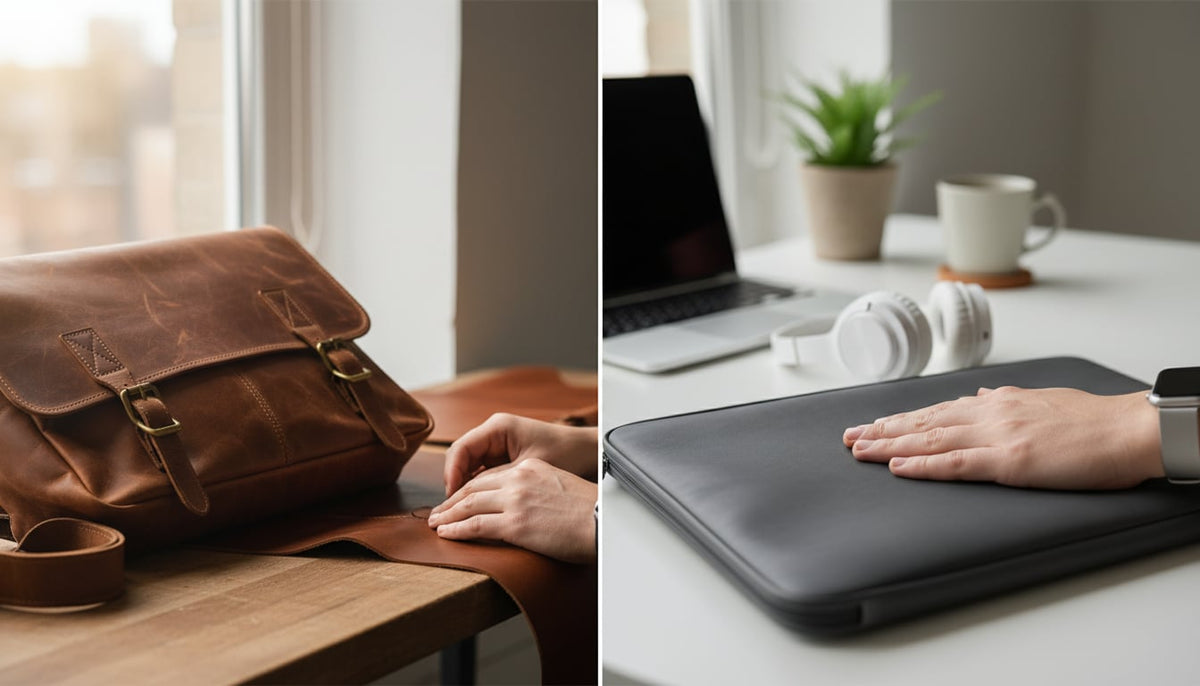
Real leather feels soft, supple, and warm to the touch. It has a natural “give” and will form organic wrinkles when you press or bend it. Faux leather often feels colder, stiffer, and more like plastic. Its machine embossed grain is perfectly uniform, lacking the unique character of a natural hide.
The Distinct Smell
The scent is another dead giveaway. Real leather has a rich, earthy, and unmistakable smell. Faux leather either has no smell or a chemical, plasticky odor from its manufacturing process.
How to Tell the Difference: Authenticity Tests
Not sure what you’re looking at? Here are a few simple tests to distinguish genuine leather vs faux leather. When you’re ready to pick a case that fits your needs, read How to Choose the Perfect Leather Phone Case for Your Style.
- The Smell Test: Real leather has a rich, natural scent. Faux leather smells like chemicals or plastic.
- The Touch Test: Real leather feels soft and flexible and wrinkles naturally. Faux leather feels more rigid and uniform.
- The Grain Test: Look closely at the surface. Real leather has an irregular grain with natural pores. Faux leather has a perfect, repeating pattern.
- The Water Test: Place a tiny drop of water on the surface. Real leather will slowly absorb it. On faux leather, the water will bead up on top.
Getting to Know Real Leather: Common Types and Finishes
Not all real leather is created equal. Here are a few types you might encounter:
- Aniline Leather: Dyed without a protective topcoat, showing all the natural grain and markings. It’s incredibly soft but stains easily.
- Semi Aniline Leather: Similar to aniline but with a light protective coating for better durability and stain resistance.
- Nubuck: Top grain leather that has been sanded to create a soft, velvety texture. It’s more durable than suede but requires careful maintenance.
- Suede: Made from the softer underside of the hide, giving it a fuzzy, napped finish. It’s less durable and highly susceptible to water damage.
- Nappa Leather: A term for particularly soft, smooth, and supple full grain leather, often used in luxury car interiors and high end accessories.
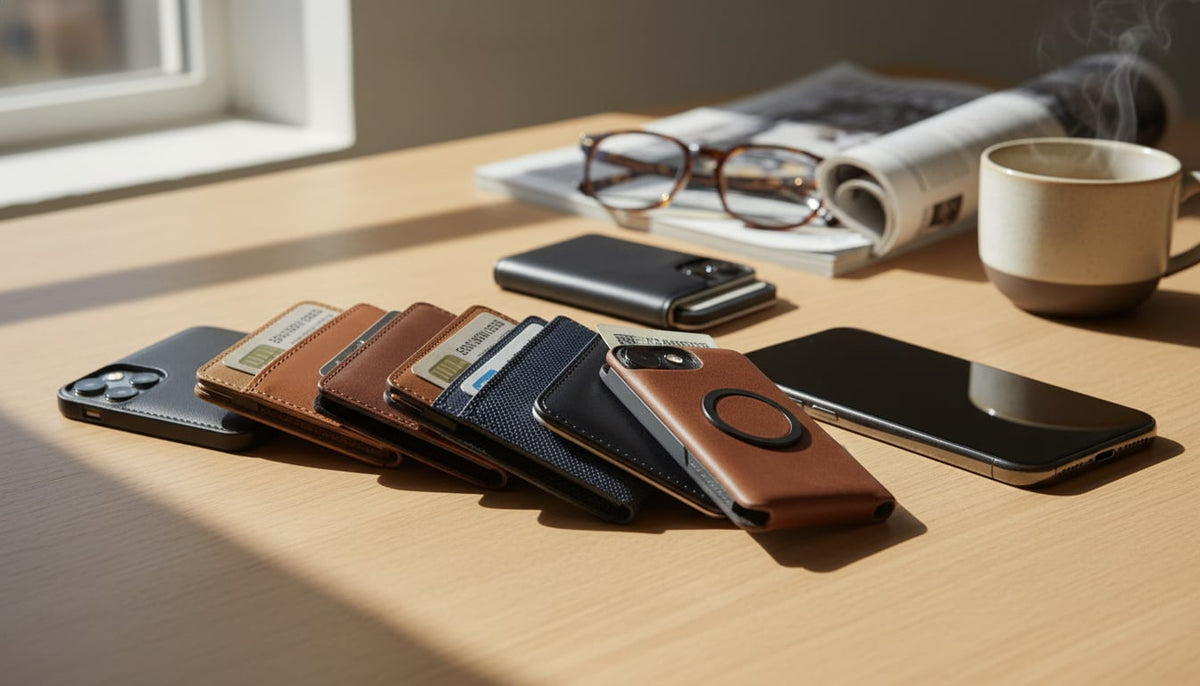
Choosing high quality materials like full grain leather ensures a product will be both beautiful and durable. It’s why Bayelon’s collection of handcrafted accessories, such as Google Pixel leather cases, is designed to not only protect your devices but to age gracefully alongside you.
Frequently Asked Questions about Genuine Leather vs Faux Leather
1. Is “genuine leather” good quality?
While it’s real animal hide, the “genuine leather” label usually indicates a lower grade of leather where the strongest top grain has been removed. It’s less durable than full grain or top grain leather.
2. Is faux leather more durable than genuine leather?
No, quite the opposite. High quality real leather can last for decades, while faux leather typically starts to crack or peel within a few years.
3. Is vegan leather better for the environment?
It’s complicated. Vegan leather avoids the environmental impact of animal farming and tanning, but most types are made from petroleum based plastics that are not biodegradable and create long term waste.
4. How can I tell if my leather is real without damaging it?
Use your senses. Real leather has a distinct earthy smell, an irregular grain pattern with visible pores, and a soft, flexible feel. Faux leather often smells like plastic, has a perfectly repeating grain, and feels more rigid.
5. Does faux leather always peel?
Over time, yes. The peeling and cracking is caused by the plastic coating delaminating from the fabric backing due to use, flexing, and exposure to oils and sunlight. This is the most common failure point for faux leather goods.


Leave a comment
This site is protected by hCaptcha and the hCaptcha Privacy Policy and Terms of Service apply.