
TL;DR
Leather care comes down to three things: clean gently, condition sparingly, and store properly. Wipe your leather products weekly with a dry microfiber cloth, condition every one to four months depending on use, and never store leather in plastic. The biggest mistake people make is over-conditioning, which clogs pores and leaves leather dull and sticky. Full-grain leather rewards consistent, minimal care with a rich patina that only gets better with age.
Why Leather Care Matters (And Why Most People Get It Wrong)
Leather is skin. It was once alive, and it still behaves like a living material in many ways. It absorbs moisture, reacts to heat, dries out without oils, and changes character over time. That last part, the aging, is actually the whole point of owning quality leather goods. But it only works in your favor if you care for your leather products properly.
The problem is that most owners either do too much or too little. They slather on conditioner every week, or they ignore their leather wallet for years and wonder why it cracked. This glossary exists to give you a single reference point, organized by concept rather than alphabet, so you can find exactly what you need whether you’re maintaining a full-grain leather iPhone case, a watch band, or a crossbody bag.
Everything here is written with full-grain leather in mind, the highest quality grade and the type that benefits most from proper care.
Understanding Your Leather
Before you touch a cleaner or conditioner, you need to know what you’re working with. The grade of leather determines how it responds to care, how it ages, and what it can tolerate.
Full-Grain Leather
This is the top layer of the hide with the entire natural grain intact, imperfections and all. It is the highest quality and most durable type of leather, retaining natural fiber strength that lower grades lose during processing. Full-grain leather develops patina over time, which is a sign of quality, not wear. It needs the least intervention of any leather grade, but it does need consistency.
What this means for you: If you own full-grain leather, your care routine should be gentle and minimal. The material is doing most of the work on its own.
For a deeper comparison of leather grades, the guide on full-grain vs. top-grain leather breaks down the differences in detail.
Top-Grain Leather
The second-highest grade. Top-grain leather has been sanded to remove surface imperfections and is often embossed with a uniform grain pattern. It is thinner and more pliable than full-grain, more resistant to stains, but less likely to develop a deep patina. Care is similar to full-grain, though top-grain is slightly more forgiving of neglect because of its treated surface.
Genuine Leather
This label sounds reassuring but is actually one of the lowest quality designations. “Genuine leather” typically comes from lower layers of the hide after the top grain has been split away. It is less durable, more prone to cracking, and does not age gracefully. Many mass-market accessories use this grade. If you’re trying to spot high-quality leather, checking the grade is the first step.
Bonded Leather
Scraps of leather fibers glued together with polyurethane and pressed into sheets. Bonded leather will peel within months of regular use. No amount of conditioning will save it. If your product is bonded leather, replacement is the better investment over care products.
Vegetable-Tanned vs. Chrome-Tanned
These terms describe how the raw hide was processed. Vegetable-tanned leather uses plant-based tannins, produces a firmer material, and is more sensitive to water. It develops patina faster and more dramatically. Chrome-tanned leather uses chromium salts, is softer and more water-resistant out of the box, and tends to maintain its original color longer. Your care approach stays mostly the same for both, but vegetable-tanned leather demands extra caution around water and benefits from slightly more frequent conditioning.
Patina
Patina is the gradual change in appearance that leather develops as natural oils, friction, and light interact with the surface over time. It is neither a scratch nor a defect. On phone cases specifically, here’s a rough timeline: during months one through three, the leather softens and develops micro-shine where your fingers grip most. By months four through six, the color deepens and the texture evens out. From month seven onward, a distinct sheen forms, darker tones mature, and small marks blend into the surface with normal use.
Full-grain leather develops patina because its intact pores allow oils from your hands and ambient light to build a rich luster. This is a feature. If you want to understand the process in more depth, the guide to how leather ages covers the full timeline.
Care Essentials: Tools and Products Defined
Knowing the difference between a cleaner and a conditioner is the single most important thing you can learn about how to care for your leather products. These are sequential steps, not interchangeable products.
Leather Cleaner
A leather cleaner removes dirt, grime, and surface buildup without stripping the natural oils from the hide. It lifts barriers so that conditioner can actually penetrate. Think of it as washing your face before applying moisturizer. A leather cleaner will remove dirt and grimy buildup, but it won’t replace the oils your leather needs.
Choose a cleaner specifically formulated for leather. Household cleaners, even mild ones, contain chemicals that can cause irreversible staining or premature cracking.
Leather Conditioner
A conditioner replenishes the natural oils that keep leather supple, flexible, and resistant to cracking. Over time, daily handling, sunlight, and air exposure draw these oils out. Conditioning puts them back.
The key word here is “replenish,” not “saturate.” More on that critical distinction in the over-conditioning section below.
Leather Balm or Wax
Different from conditioner. A balm or wax (often beeswax-based) creates a protective layer on the surface. It adds a degree of water resistance and helps seal in the conditioner’s benefits. Use it sparingly and only after conditioning, not as a substitute.
Saddle Soap
Saddle soap is a cleaner, not a conditioner. This is a common point of confusion. It removes dirt effectively but does not moisturize. If you use saddle soap, always follow up with a conditioner. Skipping that step leaves leather stripped and vulnerable.
Microfiber Cloth
The standard tool for weekly maintenance. Microfiber is soft enough to avoid scratching, fine enough to lift dust and oils from leather’s surface pores, and cheap enough that there’s no excuse not to have several. Avoid terry cloth or paper towels, which can be too abrasive for finished leather.
Distilled Water
When you need to dampen a cloth for monthly cleaning, use distilled water, not tap. Tap water contains minerals that can leave white spots on leather as it dries. Distilled water evaporates cleanly.
The Care Routine: A Schedule Mapped to Your Products
Vague advice like “condition from time to time” helps nobody. Here is a specific schedule for how to care for your leather products based on how often you use them.
Quick-Reference Care Schedule
| Product Type | Weekly | Monthly | Quarterly | Notes |
|---|---|---|---|---|
| Phone cases | Dry microfiber wipe | Damp cloth (water only) | Light conditioner + buff | Most exposed to oils, grit, dye transfer |
| Watch bands | Dry wipe after wear | Damp cloth if sweaty | Condition every 1-3 months | Sweat accelerates drying |
| Wallets and card holders | Dry wipe as needed | Damp cloth | Condition 2-4x per year | Absorb pocket oils slowly |
| Bags (crossbody, messenger, laptop) | Dry wipe | Damp cloth on handles/straps | Condition 2-4x per year | Stuff when stored; use breathable bags |
| MacBook sleeves and padfolios | Dry wipe | Damp cloth | Condition 2x per year | Lower exposure means less frequent care |
Weekly: The Dry Wipe
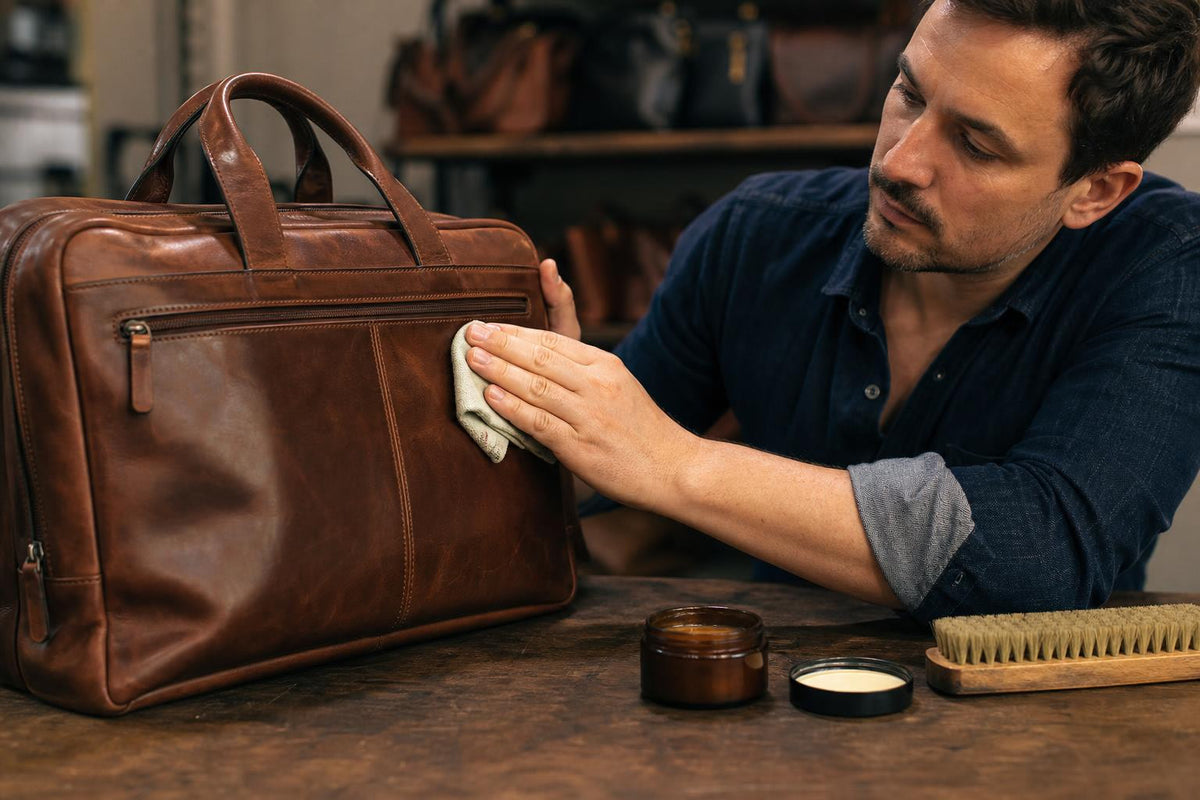
Once a week, take a dry microfiber cloth and wipe down your leather item. This removes dust, skin oils, and pocket grit before they settle into the grain. It takes thirty seconds and prevents 80% of the issues people encounter later.
Monthly: The Damp Cloth
Once a month, dampen a microfiber cloth with distilled water (nothing else) and gently wipe the surface. No soap, no spray. This loosens anything the dry wipe missed without introducing chemicals.
Quarterly: The Conditioning
Two to four times per year, apply a thin layer of leather conditioner formulated for full-grain leather. Use a clean cloth, work in small circles, and then buff lightly with a dry microfiber. The goal is a light sheen, not a wet look.
Product-Specific Notes
Phone cases take the most abuse of any leather accessory. Pocket lint, hand oils, denim dye, spills, rain, sunscreen, and constant friction all hit the same small surface. Practitioners on Reddit frequently report that the biggest issue with leather phone cases is neglecting the weekly wipe, which allows grime to build up until it discolors the leather permanently. If you carry your phone in a back pocket with raw denim, expect some color transfer. Wiping immediately helps, but prevention (a different pocket, or choosing a darker leather) is more reliable. For more phone case care specifics, the leather phone case care guide goes deeper.
Watch bands face a unique challenge: sweat. Perspiration is acidic and draws oils out of leather faster than normal handling. If you wear your leather Apple Watch band daily, especially during workouts, wipe it down after every heavy sweat session and condition every one to three months. Letting sweat dry on the band repeatedly without care will cause cracking at the flex points.
Wallets and card holders live in relatively protected environments (pockets, bags) but still absorb body heat and oils. They need less frequent attention than phone cases but should still get a quarterly conditioning. One tip from leather enthusiasts on forums: if your wallet gets soaked, dry it in the closed position. If any hardening occurs, it will at least retain its natural shape and soften again with use.
Bags need structural care in addition to surface care. When you’re not using a leather bag, stuff it with acid-free tissue paper or a soft cotton insert to maintain its shape. Collapse is harder to reverse than dryness.
What to Avoid: The Damage Glossary
Knowing what not to do is just as important as knowing the right routine. These are the most common mistakes that ruin leather.
Over-Conditioning
This is the single biggest care mistake, and it is deeply underrepresented in most guides. Signs of over-conditioned leather include a sticky surface, dull or flat appearance, and material that feels overly soft or floppy. Over-conditioning clogs the leather’s pores, traps too much moisture inside the hide, and destroys the natural sheen.
Stridewise notes that too much conditioner holds in excess moisture, leading to oversaturation. The leather finishes looking flat and unnaturally non-reflective.
Here’s the part most people miss: many new leather items arrive pretreated at the factory. Conditioning them right away can oversaturate the surface and throw off the finish. Hold off until you see genuine signs of dryness, like a lighter color at fold points or a slightly rough texture where the leather flexes.
The rule: When in doubt, do less. You can always add conditioner. You cannot undo saturation easily.
Alcohol-Based Cleaners
Never use alcohol wipes on leather. They strip natural oils aggressively, leaving the surface dry and prone to cracking. This includes hand sanitizer, which often ends up on phone cases by accident. If sanitizer contacts your leather, wipe it off immediately with a damp cloth.
Household Cleaners
All-purpose sprays, glass cleaners, antibacterial wipes: none of these belong on leather. The solvents in household cleaners can cause irreversible staining, and those containing drying agents accelerate cracking and leather rot.
Petroleum-Based Products
Petroleum jelly, mineral oil, and similar products degrade leather fibers over time. They may feel moisturizing in the short term, but they break down the hide’s structure at a molecular level.
Silicone Sprays
Silicone sprays coat the leather’s surface rather than penetrating it. This blocks the leather’s ability to breathe, trapping moisture underneath and creating conditions for mold and degradation.
Cooking Oils
Olive oil, coconut oil, vegetable oil: these are not leather conditioners. Practitioners widely report that household oils can go rancid inside leather, attracting mold and producing a smell that is extremely difficult to remove. The internet is full of “life hack” advice suggesting olive oil for leather care. Ignore it.
Direct Heat
Hairdryers, radiators, car dashboards in summer, and space heaters all cause leather to shrink, warp, and crack. When drying wet leather, patience is the only safe method. Room temperature, open air, and time.
Handling Water and Stains
Water is not leather’s enemy in small amounts, but it demands respect. Understanding the mechanism helps: the oils in leather bind to water molecules, so as water dries and evaporates, it draws those oils out. This is why leather stiffens and eventually cracks after water damage. It is not the water itself, but the oil loss that follows.
Emergency Water Rescue Protocol
If your leather product gets soaked:
- Gently blot (never rub) excess water with a soft, absorbent cloth
- Set the item in a clean, airy place at room temperature
- Let the water evaporate completely on its own
- Do not use a hairdryer, do not place it near a heater, and do not try to speed the process
- Once fully dry, apply a light coat of conditioner to replace lost oils
Rushing the drying process causes shrinkage and deformity. Time is the only safe accelerator.
Water Spots
If you notice white rings or spots after water exposure, those are mineral deposits from tap water. This is another reason to use distilled water when cleaning. For existing water spots, a lightly damp cloth with distilled water, applied evenly across the surface rather than just the spot, can help even out the appearance.
Denim Dye Transfer
This is one of the most common complaints from leather phone case owners, particularly those with lighter-colored cases. Raw and dark denim releases indigo dye, and leather absorbs it readily. Once denim dye has set into the grain, it is nearly impossible to remove completely. The best strategy is prevention: carry light-colored cases in a coat pocket or bag rather than a jeans pocket, or choose a darker leather colorway that masks transfer.
Storage and Environment
How you store leather when you’re not using it matters as much as how you maintain it during use. Climate conditions can make or break leather goods, and this angle is almost entirely missing from most care guides.
Ideal Humidity
Maintain a relative humidity level between 40% and 60% wherever you store leather products. Below 40%, leather dries and cracks. Above 60%, you’re heading toward mold territory. Mold can begin forming on leather within 48 to 72 hours if humidity stays above 70% and temperatures exceed 77°F (25°C).
If you live in a humid climate (Gulf Coast, Southeast U.S., Pacific Northwest), consider a dehumidifier in your closet or storage area during summer months. If you’re in a dry climate (Southwest, high altitude), your leather will need conditioning slightly more frequently than the standard schedule suggests.
Ideal Temperature
Aim for 60 to 75°F (15 to 24°C). Avoid attics, basements, garages, and any space where temperature swings are dramatic. A temperature-controlled closet is the best option for most people.
Breathable Storage
Store leather goods inside cotton or muslin dust bags. Never use plastic bags or sealed containers. Plastic traps moisture against the leather surface, creating the exact conditions mold needs to colonize.
For bags specifically, stuff them with acid-free tissue to maintain shape and store upright when possible. For leather wallets and card holders, a simple cloth pouch in a drawer works perfectly.
UV and Sunlight
Prolonged exposure to direct sunlight accelerates fading and drying. Don’t leave leather goods on windowsills, car dashboards, or anywhere they’ll bake in UV light for extended periods. Brief sun exposure won’t hurt, and some patina development is actually accelerated by light, but hours of direct midday sun will damage even the highest quality hide.
Climate-Specific Conditioning Adjustments
No ranking guide currently addresses this well, but it matters. The standard quarterly conditioning schedule assumes moderate, stable humidity. Adjust based on where you live:
Hot and humid climates: Condition less frequently (two to three times per year). The ambient moisture in the air reduces how quickly leather dries out. Focus more on keeping leather clean and dry rather than adding moisture.
Hot and dry climates: Condition more frequently (every six to eight weeks for daily-use items). Low humidity pulls oils out faster. Watch for early signs of dryness at fold points and edges.
Cold and dry climates (winter months): Indoor heating strips humidity from the air. Leather dries faster indoors during winter than any other season. A mid-winter conditioning session, even if you recently conditioned in fall, is worthwhile.
Temperate and moderate climates: The standard schedule (quarterly for daily items, twice yearly for occasional items) works as intended.
Caring for MagSafe and Magnetic Components
If you use a detachable wallet case or any leather product with integrated magnets (MagSafe, Qi2), the magnetic area needs no special leather care, but it does need attention. Keep the magnetic contact surface free of debris, which can scratch both the magnets and your device. A dry microfiber wipe handles this. Avoid getting conditioner or leather balm directly on exposed magnetic contact points, as residue can interfere with the magnetic connection strength over time.
For more on how magnetic technology works with leather cases, the MagSafe technology guide covers the details.
Putting It All Together
Caring for your leather products is not complicated. It is just consistent. The entire routine, weekly wipe to quarterly conditioning, takes minutes per month. The payoff is leather that looks better at year three than it did at year one.
The core principles, restated:
- Clean before you condition. Always.
- Less is more. Under-conditioning is safer than over-conditioning.
- Full-grain leather does most of the work. Your job is to not get in its way.
- Environment matters. Store smart, control humidity, avoid heat and UV.
- Water is manageable. Blot, air-dry, recondition. Don’t panic.
If you’re building a collection of leather goods that you want to last, starting with the right material makes everything easier. Full-grain leather is forgiving, ages beautifully, and responds to care in ways that lower grades simply cannot match.
Browse Bayelon’s leather accessories to see what full-grain leather looks like when it’s built to last, backed by a 90-day manufacturer’s warranty and free U.S. returns.
Frequently Asked Questions
How often should I condition my leather phone case?
For a phone case you carry daily, condition every two to three months with a very thin application of leather conditioner. If you notice the leather looks or feels dry at fold points before that interval, go ahead and condition early. Remember that many new cases arrive factory-treated, so wait until you see genuine dryness before the first conditioning.
Can I use baby wipes to clean leather?
No. Most baby wipes contain alcohol, fragrances, and moisturizing chemicals that are not formulated for leather. They can strip natural oils, leave residue, or cause discoloration. Stick to a dry or slightly damp microfiber cloth with distilled water.
How do I remove denim dye from a light leather case?
Once denim dye has set into full-grain leather, complete removal is extremely difficult. A gentle leather cleaner applied immediately after transfer may lighten it, but prevention is the better strategy. Use a darker leather colorway if you carry your phone in denim pockets, or switch to a jacket or bag pocket.
Is patina the same as damage?
No. Patina is the natural darkening, sheen development, and character that full-grain leather develops through normal use. Scratches and scuffs that might alarm you on other materials actually blend into the patina over time. It is a sign that your leather is high quality and aging as intended.
What happens if I over-condition my leather?
The leather will feel sticky, look dull, and lose its natural structure. The pores become clogged, preventing the hide from breathing. If this happens, stop conditioning immediately and allow the leather to sit in a well-ventilated space for several weeks. Light buffing with a clean, dry cloth can help restore some sheen, but patience is the main remedy.
Should I waterproof my leather products?
For most full-grain leather accessories, heavy waterproofing is unnecessary and can actually harm the leather by blocking its pores. A light application of leather balm or wax provides enough water resistance for everyday encounters with rain or spills. If you need something truly waterproof, leather may not be the right material for that specific use case.
How can I tell if my leather needs conditioning?
Look at the fold points, edges, and areas that get the most friction. If the leather appears lighter in color at these spots, feels slightly rough or papery, or has lost its subtle sheen, it is time to condition. Healthy, well-oiled leather has a consistent color and a soft, supple feel across its entire surface.
Does the type of tanning affect how I care for leather?
Yes, though the core routine stays the same. Vegetable-tanned leather is more sensitive to water and will show water spots more readily than chrome-tanned leather. It also develops patina faster. Chrome-tanned leather is more resistant to moisture out of the box but tends to maintain its original color longer. Both benefit from the same clean-then-condition approach, but vegetable-tanned products deserve extra caution around water exposure.


Leave a comment
This site is protected by hCaptcha and the hCaptcha Privacy Policy and Terms of Service apply.