
TL;DR
Leather grades describe which layer of an animal hide is used, but there is no official global standard governing these terms. Full-grain leather is the strongest and most desirable, retaining the complete outer surface and developing patina over time. “Genuine leather” on a label is usually a warning sign, not a quality guarantee. To truly evaluate leather quality, you need to understand three dimensions: the grade (hide layer), the tanning method, and the finish type.
The word “genuine” on a leather product should make you more suspicious, not more confident. That single term has probably caused more confusion than any other word in the fashion and accessories industry. And it persists because most shoppers don’t understand how leather grades actually work.
Here’s the uncomfortable truth: there is no globally standardized leather grading system. Unlike diamonds, which follow the GIA’s 4Cs, or gold, which is measured in karats, leather grades are industry conventions rather than regulated categories. That means terminology can be used loosely in marketing, and many brands take full advantage.
This leather grades guide breaks down what each term actually means, covers the dimensions most guides ignore (tanning and finish), and gives you practical tools for evaluating leather quality before you buy.
If you’re shopping for leather phone cases or everyday carry accessories, understanding these distinctions will save you money and frustration.
The Leather Grade Hierarchy (And Why It’s Not Official)
Most leather guides present a neat pyramid: full grain at the top, bonded leather at the bottom, with top grain and genuine leather in between. That hierarchy is useful as a general framework, but it’s important to know it was never established by a regulatory body.
Practitioners on Reddit have pointed this out repeatedly. A well-known thread titled “Grades of Leather are a Myth” ranks on the first page of Google for leather grade searches, and it earned that position because it challenges the oversimplified hierarchy that brand websites push. The core argument: these “grades” are marketing categories, not scientific classifications.
That said, the conventional ranking does reflect real differences in durability, appearance, and performance. The categories exist for a reason, even if nobody officially standardized them. Think of it less like a regulated grading scale and more like a generally agreed-upon quality ladder.
The conventional hierarchy from highest to lowest quality:
- Full-grain leather
- Top-grain leather (corrected grain, nubuck)
- Split leather and suede
- “Genuine leather” (when used as a grade label)
- Bonded leather
Let’s look at each one.
Full-Grain Leather
Full-grain leather comes from the upper part of the hide, and its outer surface has not been sanded, buffed, or corrected in any way. It retains the complete grain layer, including natural markings like scars, insect bites, and stretch marks. These aren’t defects. They’re proof of authenticity.
This is the only grade where you can see hair follicles on close inspection. Because the grain structure is completely intact, full-grain leather is exceptionally strong and develops a rich patina over time as oils from your hands and exposure to sunlight gradually change its color and texture.
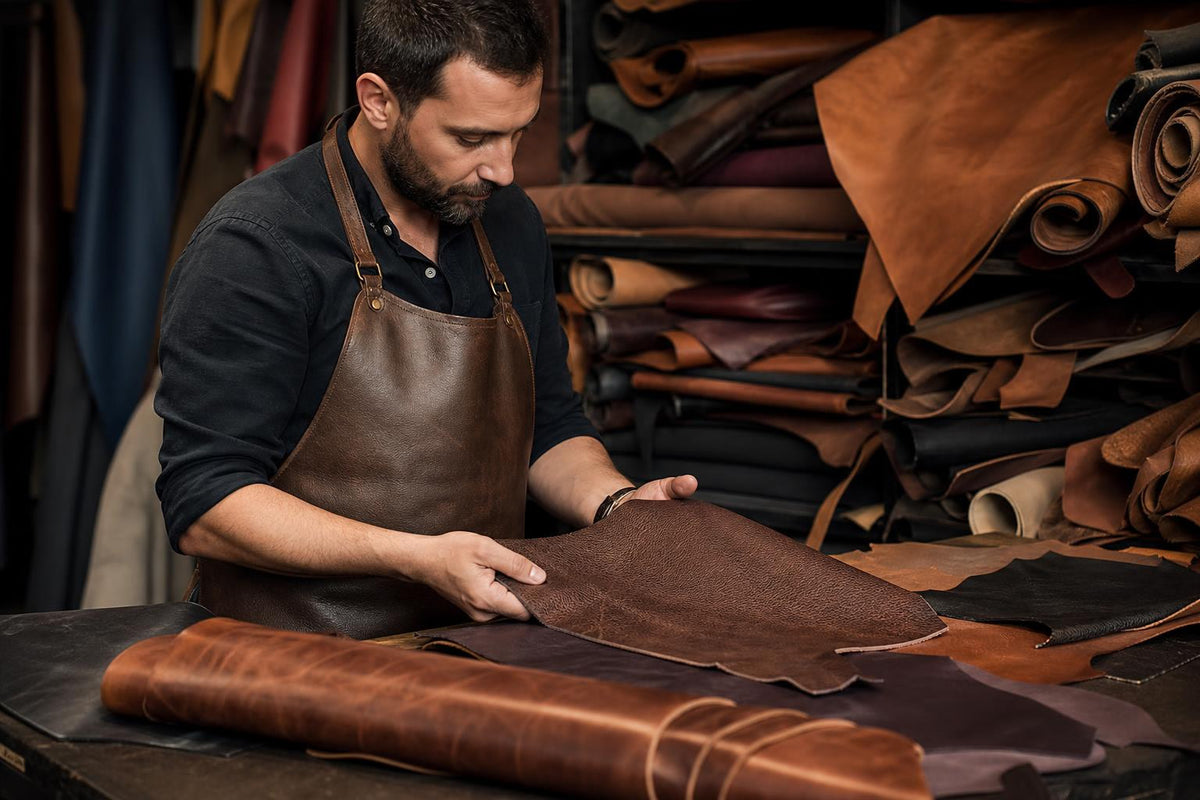
Why is it expensive? Hide selection is ruthless. Only the top 5 to 10% of raw hides are suitable for pure aniline finishing, according to data from the Global Tannery Association. The rest have too many imperfections to be used without correction.
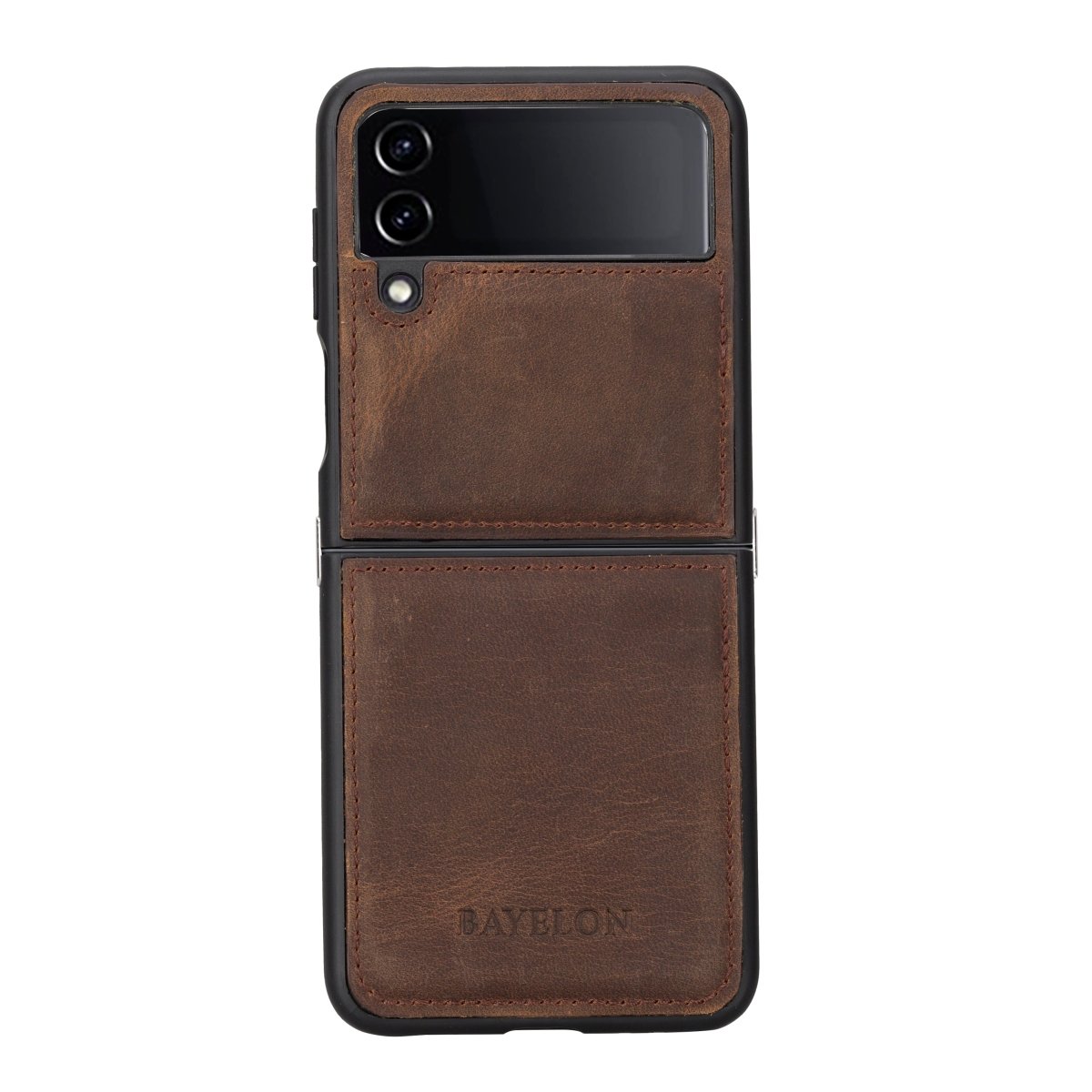
Full-grain leather works best for products you want to last years: wallets, watch bands, bags, and phone cases. On a phone case specifically, you’ll notice the leather softening and developing its first micro-shine within one to three months of daily use. By seven to twelve months, a distinct sheen forms and the case starts looking uniquely yours.
For a deeper dive, read our guide on what full-grain leather is and why it matters.
Top-Grain Leather
This is where the leather grades guide gets confusing for most people, because “top grain” is not a single grade. It’s an umbrella term.
After tanning, a hide is split into an upper layer and a lower layer. The upper layer is considered top grain. That upper layer can be left alone (making it full grain) or it can be sanded and corrected (making it corrected grain). Full-grain leather is a type of top-grain leather. Corrected grain is also a type of top-grain leather.
Many shoppers assume “top grain” means the second-best option below full grain. In reality, the term just refers to any leather from the top layer of the hide, regardless of whether it has been altered.
Corrected-Grain Leather
When a brand wants a perfectly smooth, uniform surface with zero natural marks, they use corrected grain. The top layer is heavily sanded to remove imperfections, then stamped or embossed with an artificial grain pattern to mimic natural leather texture. It looks clean and consistent, but it feels colder and more synthetic than full grain.
The sanding process weakens the fiber structure, which means corrected grain won’t develop the same depth of patina. That said, it resists stains better and requires less maintenance, which is why many premium brands deliberately choose it for products where uniformity matters more than character.
Nubuck
Nubuck is another form of top-grain leather, but instead of being embossed, the outer surface is buffed to create a velvety, suede-like texture. It’s one of the softest leathers you can find.
A common mistake: confusing nubuck with suede. The difference is which side of the hide gets buffed. Nubuck is buffed on the outer grain side (the top layer), while suede is made by buffing the inner corium side (the lower layer). Nubuck is generally more durable because it uses the stronger outer surface.
For a side-by-side breakdown, our full-grain and top-grain comparison covers the practical differences in more detail.
Genuine Leather: The Most Misunderstood Term in the Industry
If full-grain leather is the most trusted term in this leather grades guide, “genuine leather” is the most abused.
Two completely different interpretations exist, and both are technically correct depending on context:
Interpretation 1: It just means “real leather.” The term “genuine leather” is not a regulated term and can be used to describe any product made from real animal hides. Under this reading, even a full-grain leather bag could be labeled “genuine leather” because it is, in fact, genuine.
Interpretation 2: It’s a low-quality grade. Within the leather industry, anything labeled merely as “genuine leather” is typically one of the lowest grades available. It usually refers to split leather that has been finished with coatings to look presentable.
Both interpretations are valid, and that’s precisely the problem. Some brands label their products as “genuine leather” even though they use premium full-grain hides. But the practical reality is this: if a manufacturer had high-quality leather, they would almost always specify the actual grade. Calling it “full grain” or “top grain” is a selling point. Calling it just “genuine leather” is what you do when you’d rather not get specific.
The term survives largely because consumers don’t understand the grading system, and many brands exploit that gap. When you see “genuine leather” on a product listing with no further detail, treat it as a red flag, not a quality signal.
What to expect from “genuine leather” products: less durability, minimal or no patina development, and surfaces often coated with synthetic finishes to mask the lower-quality hide underneath.
For tips on reading labels and identifying quality, check our guide on spotting high-quality leather.
Split Leather and Suede
Split leather comes from the lower layer of the hide after it has been split from the top grain. It has lower tensile strength than the upper layer and lacks the natural grain surface that gives full-grain leather its character.
Suede is the most common form of split leather. It’s made by buffing the inner side of the hide to create a soft, napped finish. Suede has a place in fashion (garments, linings, some shoes), but it wears faster, stains easily, and can’t withstand the daily abuse that top-grain leather handles without trouble.
The key distinction worth remembering: suede and nubuck look similar but come from opposite sides of the hide. Suede comes from the bottom layer (weaker). Nubuck comes from the top layer (stronger). If a product claims to be nubuck but feels flimsy and thin, it’s likely suede marketed under a better name.
Bonded Leather: What to Avoid
Bonded leather deserves its own warning label. It contains just 10 to 20% actual leather, consisting of scraps ground into a fiber and bonded with polyurethane onto a fabric backing. Despite the name, it’s barely leather at all.
The performance record is dismal. Bonded leather starts peeling and flaking within one to three years of regular use, and once deterioration begins, it cannot be repaired. According to a 45-year furniture industry veteran cited by Insider’s Guide to Furniture, hundreds of thousands of complaints about peeling bonded leather have been registered since the material gained popularity around 2010.
Here’s the cost math that puts it in perspective. A $600 bonded leather sofa that lasts three years costs $200 per year. A $1,800 top-grain leather sofa lasting 20 years costs $90 per year. The “cheap” option is actually the expensive one.
The position is simple: avoid bonded leather for any product you expect to last. Phone cases, wallets, furniture, it doesn’t matter. Bonded leather will disappoint you.
Beyond Grade: Tanning Methods Matter
Most leather grades guides stop at the hide layer and call it a day. But tanning method is arguably just as important as grade, and almost nobody talks about it.
Tanning is the chemical process that turns raw animal hide into stable, usable leather. The two primary methods produce dramatically different results.
Vegetable Tanning
Vegetable tanning uses natural tannins derived from tree bark, leaves, and other plant materials. The process takes several weeks to complete, allowing the leather to retain its natural grain and structure. Vegetable-tanned leather develops the richest patina over time and has the earthy smell people associate with high-quality leather goods.
It tends to be stiffer at first, breaking in gradually with use. This is the tanning method you want in products where aging beautifully matters, like wallets, watch bands, and phone cases you carry every day.
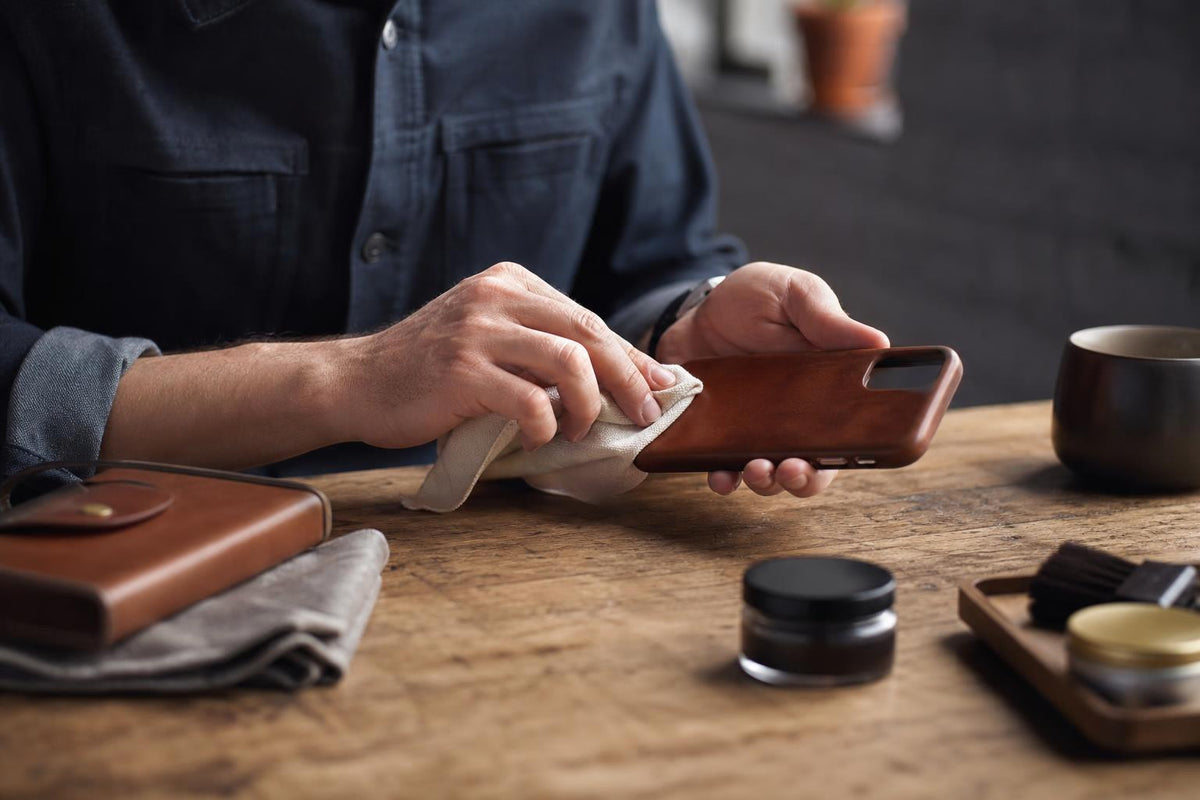
To see what that aging looks like in practice, our patina guide covers which leathers develop the best character over time.
Chrome Tanning
Chrome tanning uses chromium salts to dramatically accelerate the process, producing soft, pliable leather in days rather than weeks. It accounts for roughly 85% of all leather produced globally. Chrome-tanned leather offers a broader color spectrum and is generally more water-resistant out of the box, but it develops less patina than vegetable-tanned leather.
Combination Tanning
Some leathers go through multiple tanning stages. Chromexcel, a well-known example from Horween Leather Company, is first chrome-tanned for speed and softness, then re-tanned with vegetable tannins for character and patina potential. These combination-tanned leathers aim to capture benefits from both methods.
Beyond Grade: Finish Types (Aniline, Semi-Aniline, Pigmented)
Here’s a dimension that zero top-ranking leather grade pages currently cover, and it matters a lot.
Leather finish is separate from grade and separate from tanning. You can have a full-grain, vegetable-tanned, aniline-finished leather, or a full-grain, chrome-tanned, pigmented-finished leather. These are three independent axes of quality.
Aniline Finish
Aniline leather is dyed with soluble dyes that penetrate the surface to showcase the natural texture and markings of the hide. Because any surface imperfection remains visible, only the highest quality hides qualify. Remember that 5 to 10% figure for premium hides? Aniline finishing is where that selectivity matters most.
Aniline leather feels the warmest and most natural but is the most vulnerable to staining and water damage.
Semi-Aniline Finish
Semi-aniline leather gets a light protective coating on top of the aniline dye. The natural grain and pores are still somewhat visible, but the extra layer provides more uniform color and better durability. It’s a practical middle ground for products that see daily handling.
Pigmented Finish
Pigmented leather is sprayed with opaque pigments that cover all natural characteristics of the hide. It prioritizes protection and uniformity over natural appearance. Most automotive leather and commercial furniture uses pigmented finishes because they resist wear, stains, and fading.
Quick test: Drop a tiny amount of water on the leather. Aniline absorbs it almost immediately. Semi-aniline absorbs slowly. Pigmented leather beads the water on the surface.
How to Identify Leather Quality When Shopping
Knowing the grades is one thing. Identifying them in a store or, more commonly, from a product listing is another.
Check the label specifics. A brand that uses full-grain leather will almost always say so. If the label says only “genuine leather” or “real leather” without specifying the grade, assume it’s lower quality. If a brand doesn’t specify full-grain or top-grain leather, they are likely selling synthetic or bonded materials with clever marketing terms.
Look for natural variation. Uniform perfection is actually a warning sign. Real full-grain leather shows slight color variation, natural marks, and grain pattern differences. If every inch looks identical, it’s either heavily corrected or synthetic.
The touch test. Quality leather feels warm and supple in your hand. Lower grades and synthetics feel cold, rigid, or plasticky. Full-grain leather has a slight pull or drag when you run your finger across it.
Check the edges. Real leather has visible fibrous edges where it’s been cut. Bonded leather and synthetics often have smooth, uniform, or painted edges.
The smell test. Full-grain and top-grain leather have a rich, earthy smell. Bonded leather and PU smell distinctly chemical or plasticky. This is harder to test online, of course, but it’s definitive in person.
Price reality. Full-grain leather costs more because the hides are carefully selected. If a “full-grain leather” product seems unbelievably cheap, question it.
For a complete identification walkthrough, see our detailed quality-spotting guide.
Quick-Reference Leather Grade Comparison Table
| Feature | Full Grain | Top Grain (Corrected) | Split / Suede | “Genuine Leather” | Bonded |
|---|---|---|---|---|---|
| Hide layer | Top (complete grain) | Top (sanded, embossed) | Lower layer | Varies (often split) | Reconstituted scraps |
| Develops patina | Yes, rich over time | Limited | No | Rarely | No |
| Durability | Highest (decades) | High (10+ years) | Moderate | Low to moderate | Very low (1 to 3 years) |
| Natural markings visible | Yes | Reduced or removed | No | No | No |
| Breathability | High | Moderate | Moderate | Low | Very low |
| Relative price | $$$ | $$ | $ | $ | $ |
| Good for phone cases | Yes | Yes | No | Marginal | No |
| Good for wallets | Yes | Yes | No | Marginal | No |
Leather Grades Applied to Phone Cases and Accessories
Leather grade matters more in items you touch constantly than in something that sits on a shelf. A phone case gets handled hundreds of times a day. A wallet slides in and out of pockets. An Apple Watch band sits against your skin in heat, sweat, and rain.
For these products, full-grain leather offers the best long-term experience. It softens with use, develops a personalized patina, and actually gets better looking over time rather than deteriorating. Corrected top grain works well too, especially if you prefer a cleaner look and easier maintenance.
Bonded leather and vague “genuine leather” products in these categories are where complaints pile up. A phone case made from bonded leather will start peeling at the edges within months, and no amount of conditioning will stop it.
The patina timeline for a full-grain leather phone case typically follows this progression: months one through three bring softening and the first micro-shine where your fingers grip most; months four through six deepen the color slightly; and from month seven onward, a distinct sheen forms that makes the case look uniquely yours.
Browse our best-selling leather accessories to see what full-grain leather looks like in practice.
Frequently Asked Questions
Is genuine leather good quality?
It depends on how the term is being used. “Genuine leather” technically means real leather, so a full-grain product could carry that label. In practice though, when “genuine leather” is the only descriptor on a product, it almost always indicates lower-quality leather. If the grade were better, the brand would specify it.
What is the highest grade of leather?
Full-grain leather is universally considered the highest grade. It uses the complete, unaltered outer surface of the hide, retains natural markings, and develops patina over years of use. Only the top 5 to 10% of hides meet the quality standard for premium full-grain finishing.
Is top-grain leather better than full-grain?
Top grain is actually a category that includes full grain. Full-grain leather is a type of top-grain leather, specifically the type where the surface hasn’t been sanded or corrected. Corrected top grain has been altered for uniformity and is generally considered a step below full grain in terms of character and long-term aging.
How can I tell what grade of leather a product uses?
Check the product description for specific grade names (full grain, top grain, corrected grain). Look at the price, as full-grain products cost more. Examine photos for natural grain variation. If the listing says only “genuine leather” or “real leather” without further detail, it’s likely a lower grade.
Does bonded leather count as real leather?
Barely. Bonded leather contains only 10 to 20% actual leather scraps mixed with polyurethane. It peels and flakes within one to three years and cannot be repaired. For any product you want to last, avoid bonded leather entirely.
What’s the difference between leather grade and leather finish?
Grade refers to which layer of the hide is used (full grain, split, etc.). Finish refers to how the surface is treated after tanning (aniline, semi-aniline, pigmented). A single grade of leather can have different finishes. Both dimensions affect quality, appearance, and durability.
Why is there no official leather grading standard?
Unlike diamonds or precious metals, the leather industry has no single governing body that enforces grading definitions. The terms are conventions developed over centuries of trade, and while they’re broadly understood among professionals, they aren’t legally regulated. This is why marketing claims can sometimes be misleading.
Which leather grade is best for phone cases?
Full-grain leather is the best choice for phone cases because it withstands daily handling, develops attractive patina, and actually improves with age. Corrected top grain is a reasonable alternative if you prefer a more uniform look. Avoid bonded leather and unspecified “genuine leather” for any case you plan to use regularly.


Leave a comment
This site is protected by hCaptcha and the hCaptcha Privacy Policy and Terms of Service apply.