
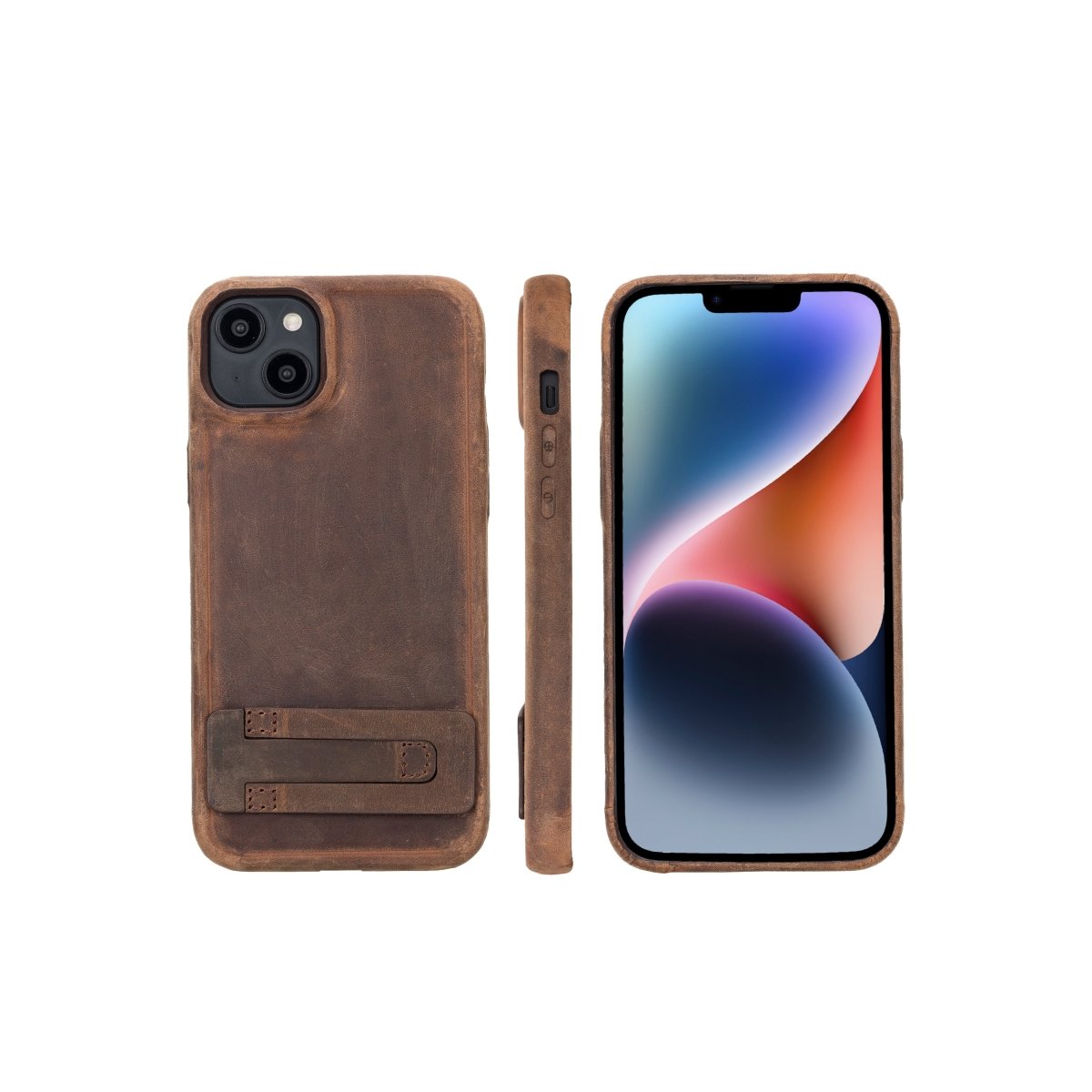

TLDR: The best way to find durable leather that develops a patina is to look for full-grain leather with vegetable tanning and an aniline or lightly protected finish. Avoid bonded, PU, faux, or heavily coated leather, all of which peel instead of age. The smartest buyers check four things before purchasing: intact grain, open finish, patina-friendly tannage, and solid construction for the specific product they need.
Not all leather ages well. Some wallets peel within a year. Some phone cases crack at the corners. Some watch bands flake a plastic-like coating after a few months of sweat. The product was labeled “leather,” but it never developed that rich, lived-in character people actually want.
Finding durable leather that develops a patina means understanding what separates leather that absorbs life from leather that falls apart under it. This guide breaks down the terms, the trade-offs, and the practical checks that matter before you buy.
Browse full-grain leather phone cases designed for daily carry and natural aging.
What “Durable Leather That Develops a Patina” Actually Means
Patina is the gradual change in leather’s color, sheen, texture, and softness as it gets handled, exposed to light, rubbed, flexed, and used over time. It is not scratches. It is not dirt. It is the organic evolution of a natural material responding to its environment. Carl Friedrik describes patina as a standard part of premium leather aging, involving deeper color, subtle sheen, and greater suppleness over time (source).
Durable leather that develops a patina, then, is leather strong enough to survive daily use while remaining natural enough to change attractively. It should age rather than peel, crack, or delaminate.
The core tension is this: the most dramatic patina comes from leather that is open, absorbent, and minimally coated. But the most low-maintenance durability comes from leather that is more sealed and protected. The buyer’s job is to find the right balance for their product, whether that is a phone case, a wallet, or a watch band.
The Durable Patina Formula: Four Things to Check
Most guides stop at “buy full-grain leather.” That is a good starting point, but it is not the whole picture. A full-grain product can still be poorly tanned, over-coated, badly stitched, or too thin. The formula that actually works has four parts.
Intact Grain
The grain is the outermost surface of the hide. Full-grain leather keeps this surface completely intact, with no sanding or buffing to smooth out imperfections. The Leather Working Group defines full grain as leather that has retained its entire grain with none of the surface removed by corrective mechanical treatment.
Why it matters: an intact grain absorbs oils, light, and friction in a way that corrected or laminated surfaces cannot. Those natural pores and texture lines are where patina lives.
Open-Enough Finish
Finish describes what covers or protects the leather surface. This is where most buyers get tripped up, because the finish determines how much of the grain you actually see and feel.
Aniline leather has no pigmented coating, so the natural surface shows clearly. Semi-aniline leather has a light pigment layer that preserves natural character while adding modest protection. Pigmented leather has an opaque finish that hides the grain beneath a uniform coating (source).
For visible patina, look for terms like aniline, semi-aniline, waxed, oiled, pull-up, or lightly finished. If you want to understand what aniline leather means in practice, the distinction between these finish types is worth learning.
Avoid leather described only as “coated” or “scratchproof” without further detail if patina matters to you.
Patina-Friendly Tannage
Tannage is how the raw hide gets stabilized into leather. The two main methods are vegetable tanning (using plant-based tannins) and chrome tanning (using chromium salts).
Vegetable-tanned leather is the strongest patina performer. It is dense, holds its shape, and changes visibly with use. The Leather Working Group’s guide to modern leather making notes that vegetable tanning uses natural plant extracts, produces leather suitable for belts, handbags, and watch bands, and “ages beautifully.”
Chrome-tanned leather accounts for roughly 80% of global leather production. It is softer, more versatile, and often more water-resistant, but it generally develops less dramatic patina. Practitioners on Reddit’s leathercraft community often describe chrome-tanned leather as more resistant to visible change compared to veg tan, with some noting it keeps colors more vibrant but does not age as hard.
The trade-off is real. If you want dramatic patina, choose natural or lightly finished veg tan. If you want color stability and easier weather tolerance, a quality chrome or semi-aniline leather may be more practical for certain uses.
Solid Construction
Patina does not save bad construction. A beautiful leather surface is useless if the phone case delaminates, the wallet slots stretch out, or the edge coating flakes off in a month.
Check for clean stitching, strong edges that look like leather (not painted plastic film), proper backing or lining, and product-specific design details. A phone case needs raised edges for screen and camera protection. A wallet needs reinforced card slots. A watch band needs comfortable backing that handles skin contact.
Best Leather Types for Patina
Full-Grain Vegetable-Tanned Leather
This is the safest shorthand for durable leather that develops a patina. It combines an intact grain surface with plant-based tannins that are known for attractive aging. Natural, tan, cognac, and brown colorways show the most dramatic darkening and patina development.
Craft & Lore, a practitioner-focused brand, states plainly that natural veg tan is the leather that will patina the most. That matches what leatherworkers report in community forums and what tannery specifications confirm.
One caveat: vegetable-tanned leather is not always the most water-resistant or stain-resistant option. The LWG guide rates it as only fair for waterproofness. If you carry your phone case in the rain regularly or sweat heavily on your watch band, you may want a lightly protected finish on top.
Full-Grain Aniline or Semi-Aniline Leather
Aniline leather shows the most natural surface because there is no pigmented coating hiding the grain. Semi-aniline offers a middle ground, adding a light pigment layer that improves stain resistance without fully concealing the hide’s natural character.
Both develop visible patina because the surface remains open enough to absorb oils, light, and friction. Semi-aniline is often the better choice for daily-carry accessories because it balances natural beauty with practical protection.
Waxed, Oiled, and Pull-Up Leathers
These develop high-contrast, rugged patina. Scratches and bends create visible color variation because oils and waxes shift within the leather. Horween, one of America’s oldest tanneries, defines pull-up as temporary lightening when folded, caused by displaced oils and waxes in the leather.
The result is a leather that shows every crease, fold, and grip mark. If you like a vintage, well-worn look, pull-up leather is a strong candidate.
Leather Types That Will Not Develop a Good Patina
Bonded or Reconstituted Leather
Bonded leather is made from ground, shredded, or pulverized leather fibers mixed with binders. It is not a solid hide surface. The FTC’s leather guides specify that bonded or reconstituted materials should not be represented as leather if they are not wholly animal hide, and that composition percentages should be disclosed.
This material peels. It cracks. It delaminates. Practitioners on Reddit’s r/BuyItForLife regularly point to bonded or coated materials as the reason “leather” wallets fall apart within a year. Multiple threads describe the frustration of buying something labeled leather only to watch it shed a plastic-like top layer in months.
The opposite of patina is peeling. If a “leather” product sheds its surface coating, that is not graceful aging. That is coating failure.
PU, Faux Leather, and Leatherette
These are synthetic or leather-like materials. They may look similar to leather initially, but they do not develop true leather patina. They may scuff, discolor, or crack, none of which constitutes the organic aging that makes real leather more attractive over time.
Heavily Pigmented or Coated Leather
Pigmented leather can be genuinely durable and practical. It resists stains and maintains a uniform appearance. But the opaque finish hides the natural grain surface, and aging tends to look like coating wear rather than depth. If patina is a priority, heavily pigmented leather is the wrong pick.
How to Inspect Leather Before You Buy
Read the Product Description
The strongest patina product descriptions stack terms. Look for combinations like: full-grain + vegetable-tanned + aniline + natural finish. Or full-grain + waxed + pull-up. Tannery-specific leather names from known sources (Horween, Badalassi, Pueblo, Buttero) are strong signals too.
LinkedIn posts from leather practitioners like AP Muller and Sorensen Leather describe their patina-friendly hides using exactly this vocabulary: vegetable-tanned, full grain, through-dyed, aniline finished, pull-up effect. When product pages use similar language with specificity, that is a good sign.
Be cautious with vague phrases. “Premium leather” could mean anything. “Genuine leather” means real leather, but tells you nothing about grain layer, tannage, finish, or construction. If you are unsure whether a product is real leather at all, learning how to tell real from fake is worth the five minutes.
Inspect the Surface
Good signs: natural grain variation, visible pores, color depth, slight pull-up or wax movement, edges that look and feel like leather.
Bad signs: perfectly uniform embossed texture, plastic shine, peeling at corners, a backing that looks like fabric or plastic while the product is marketed as all leather.
Check Construction for Your Use Case
A phone case needs leather plus shock protection, raised edges, camera cutout precision, and attachment quality. A wallet needs stitching durability, slot reinforcement, and edge finishing that will not flake. A watch band needs skin comfort, sweat tolerance, and solid hardware.
Thickness matters too, but there is no single “best” thickness. Phone cases need leather thin enough for a good grip and device fit. Wallets need enough substance to hold shape without creating bulk at the fold.
How Long Does Patina Take?
On a daily-use item like a phone case or wallet, the first signs of patina can appear in the first few months: softer edges, a slight shine where your fingers grip, and darker color in high-contact areas. BlackBrook gives a specific timeline for leather phone cases, noting months 1 through 3 bring softening and micro-shine, months 4 through 6 bring slight color deepening, and 7 through 12+ months produce a distinct sheen and more personal look.
Carl Friedrik notes that signs can emerge within a week, a month, or a year depending on use and environment. Frequent use is the most reliable way to accelerate the process.
Lighter colors show patina faster. Tan, natural, and cognac leathers darken visibly within weeks. Black leather still patinas, but the change is subtler: more sheen, edge softening, and tonal variation rather than dramatic browning.
A leather phone case or wallet develops patina for the same reason leather stairs do: repeated contact, friction, light, and oils change the surface in high-use zones. Leather Naturally shared an example of vegetable-tanned leather stairs where the surface tells its story through constant use, darkening where walked on and lightening where exposed to sunlight. Small accessories follow the same principle on a pocket-sized scale.
How to Encourage Patina Without Ruining the Leather
The best patina strategy is simple: use it. Carry it. Handle it. Let your hands, your pocket, and daily life do the work.
For maintenance, wipe gently with a dry or slightly damp cloth. Condition sparingly when the leather feels dry, not on a weekly schedule. Over-conditioning can saturate the leather, darken it prematurely, and flatten the natural variation that makes patina interesting.
Avoid alcohol wipes, harsh cleaners, soaking, and direct heat. Do not bake your leather in the sun or soak it in oil to “speed up” patina. Those methods can stain, dry, or weaken the material. For a deeper guide, see how to condition leather accessories properly.
Patina vs. Dirt vs. Damage
These three things get confused constantly, and it is worth drawing clear lines.
| What you see | Patina? | Dirt? | Damage? |
|---|---|---|---|
| Darker grip points | Yes | No | No |
| Soft shine on high-contact areas | Yes | No | No |
| Mellowed, rounded edges | Yes | No | No |
| Blended, faded scuffs | Yes | No | No |
| Greasy or dull film on surface | No | Yes | No |
| Peeling top layer | No | No | Yes |
| Cracking coating | No | No | Yes |
| Delamination from backing | No | No | Yes |
| Broken or fraying stitching | No | No | Yes |
Patina is gradual. It builds depth. Dirt sits on the surface and can be wiped away. Damage is structural failure, and it usually points to poor materials or construction rather than normal aging.
Common Confusion Points
Is “Genuine Leather” Bad?
Not automatically. “Genuine leather” simply means real leather. It does not indicate what part of the hide the leather comes from, what tannage was used, or how the surface was finished (source).
The internet popularized a “leather grades” hierarchy (full-grain > top-grain > genuine > bonded) that multiple leathercraft communities have debunked. A highly upvoted r/BuyItForLife post argues that the “grades of leather” hierarchy is a myth and that these terms do not function like an official grading system. The better approach is to treat “genuine leather” as insufficient information, not a death sentence. Ask what else the seller can tell you.
Does Top-Grain Leather Develop Patina?
Sometimes, but usually less deeply than full-grain. Top-grain can actually be full-grain (uncorrected) or corrected grain (sanded and refinished). The distinction matters. Corrected surfaces absorb less and show less natural aging. For a fuller breakdown, see full-grain vs. top-grain explained.
Does Black Leather Patina?
Yes. The change is less visually dramatic because you start from a dark baseline. Expect more sheen development, edge softening, subtle tonal shifts, and a richer hand feel rather than the obvious browning you get with tan leather.
Is Uneven Patina a Problem?
No. Unevenness is part of the appeal. Wallet corners, phone-case grip points, watch-band holes, edges, and fold lines darken faster than protected areas. One leathercraft community discussion put it well: part of the beauty is the mottled, uneven appearance that develops naturally with use.
Product-Specific Patina Tips
Phone Cases
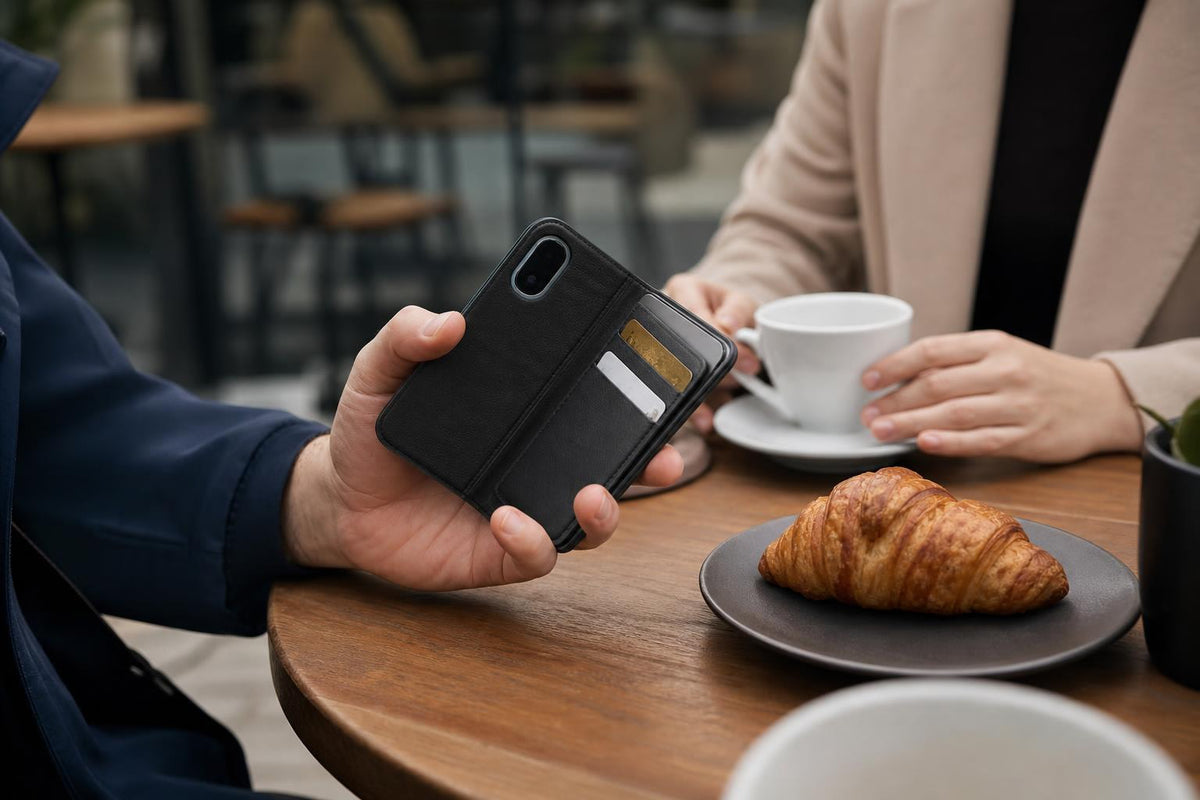
Phone cases patina fastest on grip points, corners, camera edges, and wallet flap surfaces. You handle your phone dozens of times a day, so the leather gets constant friction and oil exposure.
The challenge is balancing leather feel with device protection. A good leather phone case pairs full-grain leather with a protective inner structure, raised screen and camera edges, and precise port cutouts. The leather should darken at grip points without peeling.
Wallets and Card Holders
Wallets patina fastest on corners, the fold line, the pocket-facing side, and card-slot edges. The friction from sliding in and out of a pocket every day drives steady, visible change.
Full-grain leather wallets in natural or tan colorways show the most dramatic aging. One practical note: overstuffing card slots stretches the leather and stresses stitching. That is damage, not patina.
Watch Bands
Watch bands age around buckle holes, underside edges, and wherever sweat accumulates. Comfort and lining quality matter more here than with other accessories because the leather sits against skin all day.
Look for clean edge finishing and a backing that handles moisture reasonably well. Semi-aniline or lightly protected finishes often work better for watch bands than fully naked veg tan, which can stain and darken aggressively from sweat.
Leather Apple Watch straps built with these considerations in mind offer a good balance of daily comfort and aging character.
Leather Comparison at a Glance
| Leather type | Durability | Patina potential | Key buyer note |
|---|---|---|---|
| Full-grain vegetable-tanned | High | Very high | Best shorthand for aging beautifully. Can stain if very lightly finished. |
| Full-grain aniline | High | High | Natural surface shows deeply, less protected against soiling. |
| Full-grain semi-aniline | High | Medium-high | Good balance of natural character and practical protection. |
| Oil pull-up / waxed | High | Medium-high to high | Scratches create color contrast; marks blend with use. |
| Top-grain corrected | Medium-high | Low-medium | Not bad, but sanding and heavier finish reduce patina depth. |
| Pigmented/coated | Can be high | Low | Uniform and protected, but hides the natural surface. |
| Bonded/reconstituted | Low | Very low to none | Peels and delaminates. Not a solid hide. |
| PU/faux/leatherette | Varies | None as leather patina | May wear or peel. No organic aging. |
Frequently Asked Questions
What leather develops the best patina?
Full-grain vegetable-tanned leather usually develops the strongest and most visible patina. It combines an intact grain surface with plant-based tannins that are known for attractive aging. Natural and light brown colors show the most dramatic change.
How can I tell if leather will patina before I buy?
Look for product descriptions that specify full-grain, vegetable-tanned, aniline, semi-aniline, waxed, oiled, or pull-up leather. Avoid vague terms like “premium leather” or “genuine leather” with no other detail. Before-and-after photos from the seller are one of the strongest buying signals.
Does genuine leather develop patina?
Some can, but “genuine leather” alone is too vague to rely on. It means real leather, not necessarily high-quality patina leather. You need to know the grain layer, tannage, and finish to judge patina potential.
How long does it take for leather to patina?
On daily-use items like phone cases and wallets, early signs can appear within 1 to 3 months. Fuller, richer patina typically takes 6 to 12 months or longer. Lighter colors and more frequent handling speed the process.
Can you speed up leather patina?
The most reliable method is frequent use. Regular handling, friction, and natural light exposure build patina naturally. Avoid shortcuts like oil soaking, heat exposure, or alcohol wiping, which can stain, dry, or weaken the leather.
Is patina the same as wear and tear?
No. Patina is gradual darkening, softening, sheen development, and blended surface character. Wear and tear includes peeling, cracking, delamination, and broken stitching. If the surface is shedding a coating, that is damage, not patina.
Does black leather develop patina?
Yes, though the change is subtler than with lighter colors. Expect increased sheen, softer edges, and tonal variation rather than visible darkening.
What leather should I avoid if I want patina?
Avoid bonded leather, reconstituted leather, PU or faux leather, leatherette, and heavily pigmented or coated leather. These materials either peel, crack, or resist the absorption that produces true patina.
Finding the Right Balance
Durable leather that develops a patina is not one thing. It is a balance between openness and protection, between aging potential and practical resilience. The leather that patinas hardest is not always the easiest to maintain. The leather that is easiest to maintain does not always age with much character.
The buyer’s formula is straightforward: intact grain, open-enough finish, patina-friendly tannage, and construction that matches the product’s daily demands. Full-grain vegetable-tanned leather is the best shorthand. But the smartest buyers look past the label and check the finish, the edges, the stitching, and the seller’s willingness to disclose material details honestly.
Browse Bayelon’s full-grain leather accessories, including phone cases, wallets, watch bands, and card holders built for daily use and natural aging.


Leave a comment
This site is protected by hCaptcha and the hCaptcha Privacy Policy and Terms of Service apply.