
TL;DR
Full grain leather keeps the hide’s original surface intact, complete with natural pores and marks, which allows it to develop a rich patina over time. Top grain leather is actually an umbrella term that includes full grain, but most people use it to mean corrected grain, where the surface has been sanded smooth. The “right” choice depends on whether you want character that deepens with age or a uniform, low-maintenance finish. Quality also depends heavily on tanning method and craftsmanship, not just grain type alone.
What Is the Difference Between Top Grain and Full Grain Leather?
Here’s the short version: full grain leather is the top layer of a hide with its natural surface left completely untouched. Top grain leather (as most retailers use the term) is also from the top layer, but the surface has been sanded or buffed to remove imperfections and create a smoother, more consistent look.
The critical nuance that almost every buying guide gets wrong: top grain is technically the umbrella category, and full grain sits inside it. If leather comes from the top of the hide and hasn’t been altered, it’s both top grain and full grain at the same time. But in common usage, “top grain” has come to mean “corrected grain,” where the surface gets modified.
That distinction shapes everything from how the leather ages to what it costs.
| Factor | Full Grain | Top Grain (Corrected) |
|---|---|---|
| Surface | Natural, unaltered; visible pores and marks | Sanded/buffed; smoother, more uniform |
| Patina | Rich, develops over months and years | Reduced or minimal |
| Durability | Densest fibers; wears in, not out | Still strong; slightly less breathable |
| Stain Resistance | Lower unless treated; absorbs oils | Higher, due to finish or coating |
| Price | Higher (fewer hides qualify) | Lower; more hides can be used |
| Best For | Phone cases, wallets, watch bands, heritage goods | Furniture, formal accessories, mass-produced goods |
| Natural Marks | Visible (scars, grain variation) | Removed or hidden |
If you’re shopping for everyday leather accessories like phone cases or wallets, that table should guide most decisions. But the real story is more interesting than a simple chart.
→ Browse full grain leather iPhone cases
Full Grain Leather Explained
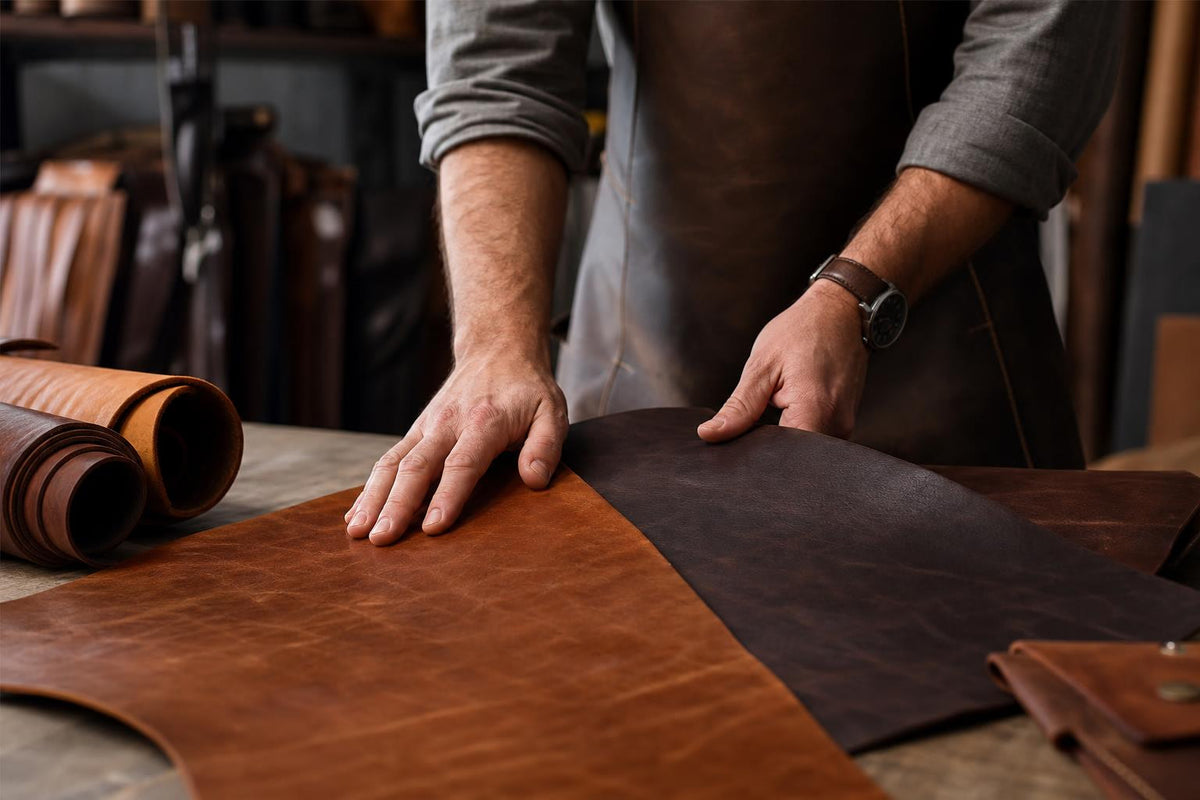
Full grain leather uses the outermost layer of the animal hide with zero surface alteration. Look closely at a piece of full grain leather and you’ll see the actual hair follicles. Those tiny pores aren’t a defect. They’re proof that the grain hasn’t been touched.
Because the grain is intact, full grain leather contains the densest, strongest, and most tightly woven fibers in the entire hide. This is what makes it so durable. It doesn’t just resist wear; it actually improves with use. Daily handling introduces natural hand oils, sunlight exposure, and friction that gradually shift the leather’s color and texture into something uniquely yours.
This material is also the rarest. Only hides without significant scarring, insect bites, or barbed wire marks can qualify. That scarcity drives the price up, but it also means you’re getting a piece of leather that passed strict visual inspection before it ever reached a workshop.
Where Full Grain Works Best
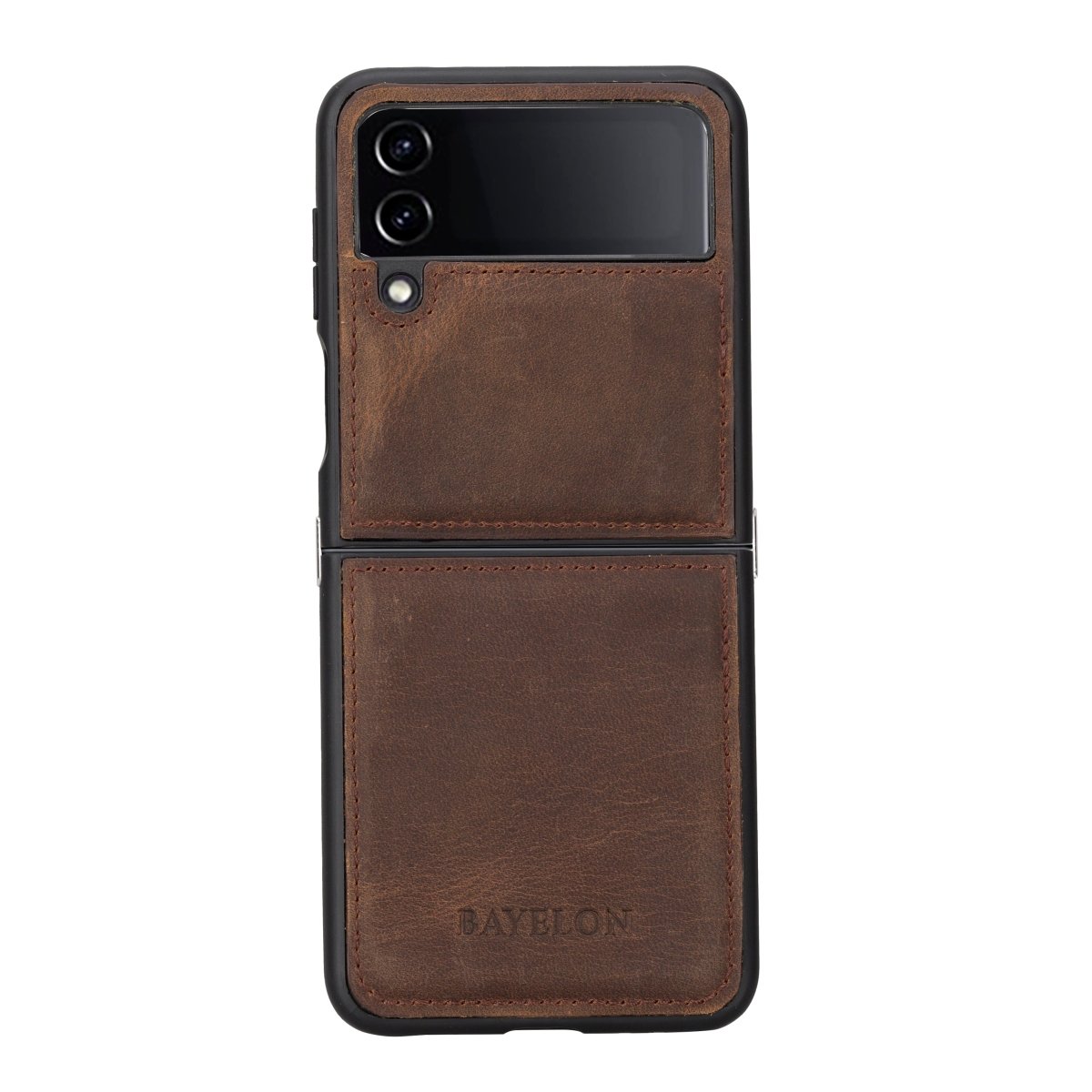
Full grain leather shines in products you touch constantly: phone cases, wallets, watch bands, and card holders. These are items where daily contact accelerates patina development, turning a new product into something with visible history within weeks.
For phone cases specifically, the combination of hand oils, pocket friction, and sunlight creates some of the most dramatic patina you’ll find on any leather good. You can read more about why full grain matters for phone cases and how that plays out over months of use.
Top Grain Leather Explained
Top grain leather (in its corrected form) starts from the same upper portion of the hide. The key difference is that the surface undergoes a sanding or buffing process to remove imperfections, followed by pigmentation or embossing to create a uniform appearance.
This isn’t necessarily a bad thing. The correcting process makes the leather more resistant to stains and scratches. It also means more hides qualify for production, since scars and natural marks get removed rather than disqualifying the material. The result is a smoother surface that takes dye more evenly and requires less maintenance.
Top grain leather is the standard for most leather furniture, handbags from mainstream fashion brands, and formal accessories where a consistent appearance matters more than individual character. It’s still real, quality leather. It’s just been optimized for a different set of priorities.
The tradeoff is real, though. By removing the outermost grain, the correcting process also removes the fiber structure that enables deep patina development. The leather may darken slightly over time, but it won’t develop the same dimensional, lived-in character that full grain is known for.
The Nuance Most Guides Miss
“Top Grain” Is the Umbrella, Not the Subset
This is the single most misunderstood fact in leather terminology. A VP at Horween (one of America’s oldest and most respected tanneries) put it plainly in an interview with Stridewise: “When we process the hide itself, we split the top part of the skin from the underside, and that’s the top grain. Top grain used to mean a lot, but it’s been watered down.” Among tannery professionals, what consumers call “full grain” is actually a kind of top grain.
So when comparing top grain leather vs full grain, you’re really comparing corrected grain against uncorrected grain. Both come from the same part of the hide.
The Leather Pyramid Is Oversimplified
You’ve probably seen the internet’s popular leather hierarchy: full grain at the top, then top grain, then genuine, then bonded at the bottom. It’s a useful mental model, but tannery professionals find it misleading.
Michael Batson of North Star Leather (a career leatherworker whose insights are widely cited on Reddit and leather forums) has been vocal about this: low quality full grain leather exists, and a high quality corrected grain leather from a tannery like Horween or S.B. Foot will be as good or better than cheap full grain. Most tanneries use their own proprietary grading systems based on cosmetic imperfections, not a universal quality ranking.
Practitioners on the Leatherworker.net forums echo this. The consistent community position: the choice between top grain and full grain often has more to do with taste and usage than a simple quality hierarchy. Someone building a formal briefcase might specifically choose corrected grain for its uniform finish. That’s a design decision, not a compromise.
Horween Chromexcel: The Famous Exception
Horween’s Chromexcel is arguably the most beloved leather in the heritage boot and accessory world. People assume it’s full grain. It’s not. Horween’s VP confirmed directly: “The whole world thinks Chromexcel is full grain because when you look closely at it, you can see the grain. But we correct it. We just correct it so little that we leave part of the grain on the leather.”
This should recalibrate how you think about the top grain leather vs full grain debate. The line between them is blurrier than marketing materials suggest, and the best leather in the world doesn’t always fit neatly into a single category.
No Industry Standard Definitions Exist
Here’s something that explains a lot of the confusion. As Horween’s Culliton puts it: “Our industry is based on marketing, and while it’s a big industry in aggregate, tanneries tend to be smaller companies. We don’t have a GM or a Philip Morris to set industry standards.” North Star Leather found that at least ten “leather glossaries” from reputable sites define top grain differently, some as corrected grain and some as interchangeable with full grain.
This is exactly why knowing your source matters more than knowing the label.
Tanning Method Matters as Much as Grain Type
Here’s a two-axis framework that no competing guide provides. When evaluating leather quality for aging and patina, you need to consider both grain type and tanning method.
Vegetable tanning takes 30 to 60 days (compared to one or two days for chrome tanning), produces leather that develops rich patina over years of use, and represents less than 10% of global leather production. Chrome-tanned leather, by contrast, tends to maintain its original appearance over time and resists the color shifts that patina enthusiasts prize.
So a chrome-tanned full grain hide may not patina the way you expect, while a vegetable-tanned corrected grain might develop more character than you’d think. The combination of full grain plus vegetable tanning gives you the maximum patina potential. Chrome tanning plus corrected grain gives you the most consistent, unchanging appearance. Most leather goods fall somewhere between these two poles.
For a deeper look at how tanning and grain interact over time, the leather patina explained guide covers which leathers age best and what to expect month by month.
Other Leather Grades You’ll See
Understanding the full spectrum helps you shop more confidently. Here’s a quick reference for terms you’ll encounter.
Corrected Grain: Real leather whose natural surface has been sanded or buffed to remove visible imperfections like scars or uneven grain. After correction, the surface is pigmented or embossed to create a uniform look. It’s still real leather with a modified grain layer.
Genuine Leather: This simply means it’s real leather. It does not indicate what part of the hide the leather comes from. The term often implies lower-quality leather from the lower portion of the skin, but technically any real leather qualifies as “genuine.” If you want to understand the full hierarchy, the leather grades guide breaks down each tier in detail.
Split Leather: Comes from the lower layer of the skin after the top grain has been separated. Splits can be corrected and refinished to mimic grain leather, but they lack the fiber density of top or full grain.
Bonded Leather: Leather scraps ground into pulp and reconstituted with adhesives. This is the lowest category, essentially a leather-adjacent composite material rather than leather in any meaningful sense.
Nubuck: Top grain leather that has been sanded or buffed on the grain side to produce a velvet-like surface with a slight nap of short protein fibers. It’s soft and attractive but requires more care than smooth-finished leather.
Patina: The Key Differentiator for Everyday Carry
Patina is the primary reason most people research top grain leather vs full grain in the first place. It’s the gradual change in color, texture, and sheen that happens as leather absorbs oils, gets exposed to sunlight, and develops friction marks from daily use.
Only leather with an intact or mostly intact grain surface can develop meaningful patina. Full grain leather is the clear winner here. The unaltered surface absorbs and reacts to environmental factors in ways that corrected leather simply cannot, because the sanding process removes the fiber structure that makes these changes possible.
A few things worth knowing about patina:
Color matters. Tan and brown leathers offer the most dramatic transformation, shifting from new and uniform to richly weathered. Black leather typically stays the same color, though it develops more varied texture and softness with age. If visible patina is your goal, lighter colorways will reward you most.
Timeline varies. Phone cases and wallets, because they get handled so frequently, tend to develop noticeable patina within the first two to four weeks. Items with less skin contact, like bags, take longer.
No two pieces age the same. Because patina results from your specific usage patterns, hand chemistry, and environment, every piece of full grain leather becomes genuinely one of a kind.
Top grain (corrected) leather may darken and show surface wear over time, but it doesn’t develop the same depth. The altered surface and added finish act as barriers to the natural aging process that creates character.
How to Tell Which Leather Your Product Uses
When shopping, labels alone aren’t reliable because there are no standardized definitions. Here are practical ways to evaluate:
Look for pores. Full grain leather will show natural pore patterns, slight variations, and sometimes faint marks from the animal’s life. If the surface looks perfectly smooth and uniform, it’s likely been corrected.
Touch it. Full grain leather feels organic and slightly textured. Corrected grain feels smoother and more consistent, sometimes almost plastic-like if heavily finished.
Smell it. Quality leather (both full and top grain) has a distinct, rich scent. Bonded leather and heavily finished products often smell chemical or have no leather scent at all.
Check for consistency. If every inch of a large leather piece looks identical, it’s probably been corrected and dyed uniformly. Full grain leather will show subtle color variations and natural marks.
Ask the seller. Reputable brands will specify both the grain type and the tanning method. If a company is vague about its leather, that’s a red flag. Our guide on how to spot high-quality leather covers additional warning signs to watch for.
Why Bayelon Uses Full Grain Leather
Bayelon builds its entire product line around 100% full grain leather. For products like phone cases, wallets, watch bands, and card holders, this choice makes particular sense. These are items that live in your hands and pockets, accumulating the daily contact that turns quality leather into something personal.
The emphasis on full grain means every Bayelon product starts with hides that passed inspection for their natural grain, then gets handcrafted into accessories designed for both protection and character. The leather ages, develops patina, and becomes more distinctly yours over months and years of use.
→ Explore full grain leather wallets
Frequently Asked Questions
Is top grain leather real leather?
Yes. Top grain leather is absolutely real leather. It comes from the upper portion of an animal hide, the strongest part of the skin. Whether it’s been corrected (sanded) or left in its natural state (full grain), it’s genuine leather. The term “top grain” refers to the layer of the hide, not whether it’s authentic.
Is full grain leather always better than top grain?
Not always. Full grain is better for durability, patina development, and breathability. But high-quality corrected grain leather from a reputable tannery can outperform cheap full grain leather. Horween’s Chromexcel, which is technically corrected, is considered among the world’s finest leathers. The right choice depends on your priorities: character and aging versus uniformity and stain resistance.
Does top grain leather develop patina?
Corrected top grain leather develops minimal patina compared to full grain. The sanding process removes the outermost fiber structure responsible for absorbing oils and reacting to light over time. It may darken slightly or show surface wear, but it won’t develop the rich, dimensional aging that full grain is known for.
What is the most durable type of leather?
Full grain leather is the most durable because it retains the tightest, densest fiber structure from the hide’s surface. It’s commonly described as leather that “wears in, not out,” meaning it gets softer and more attractive with use rather than deteriorating. Tanning method also plays a role: vegetable-tanned leather tends to be stiffer initially but breaks in beautifully, while chrome-tanned leather starts softer.
Can leather be both top grain and full grain?
Yes. This is the most misunderstood fact in the industry. “Top grain” refers to leather from the upper part of the hide. If that leather hasn’t been sanded or corrected in any way, it qualifies as full grain too. Full grain is a subset of top grain. The confusion arises because retailers use “top grain” as shorthand for corrected grain.
Does the color of leather affect patina?
Significantly. Tan and brown leathers show the most dramatic patina transformation, shifting through deeper, warmer tones over time. Black leather mostly retains its color but develops richer texture and softness. If you want the most visible aging, choose lighter shades.
Why are leather terms so confusing?
Because the leather industry has no centralized body setting definitions. Tanneries are typically small companies that develop their own terminology, and retailers often adopt marketing terms that don’t correlate to technical standards. At least ten reputable leather glossaries define “top grain” differently. The safest approach is to buy from brands that specify both grain type and tanning method, and that show you the actual leather rather than hiding behind vague labels.
Is vegetable-tanned leather better than chrome-tanned?
They serve different purposes. Vegetable tanning, which accounts for less than 10% of global leather production, takes 30 to 60 days and produces leather with superior patina potential. Chrome tanning takes one to two days and produces leather that’s softer from the start and more resistant to water, but it maintains its original appearance rather than developing character. For everyday carry items where aging is part of the appeal, vegetable-tanned full grain is the gold standard.


Leave a comment
This site is protected by hCaptcha and the hCaptcha Privacy Policy and Terms of Service apply.