
TL;DR
Distressed leather is genuine leather that has been intentionally treated to look aged and worn. It is not a leather grade, but a finishing technique applied to full-grain or top-grain hides through sanding, tumbling, waxing, or chemical treatment. The result is a material with visible character marks, color variation, and a lived-in feel from day one. It is real leather, it is durable, and it actually gets better with age.
Shopping for a leather phone case, wallet, or jacket and stumbled across the term “distressed leather”? You’re not alone. The worn, vintage look throws people off. It looks old, so it must be cheap, right? Wrong. Distressed leather is one of the most misunderstood terms in the leather world, and clearing up that confusion is exactly what this guide is for.
If you’re browsing for full-grain leather accessories, understanding what distressed leather actually is will help you make a smarter purchase.
What Is Distressed Leather?
Distressed leather is genuine animal-hide leather that has been intentionally aged, scratched, or treated to achieve a worn, vintage appearance. The distressing process accelerates the natural patina development that would otherwise take years of daily use. Think of it as fast-forwarding the aging process so the leather looks characterful the moment you take it out of the box.
Here’s the critical distinction most guides miss: distressed leather is a finish, not a grade. The leather industry classifies hides by grade (full-grain, top-grain, corrected-grain, bonded). Distressing is a surface treatment applied after tanning, on top of one of those grades. A distressed leather wallet could be made from premium full-grain cowhide or from mediocre corrected-grain. The finish looks similar at first glance. The base grade determines whether the piece will age beautifully or fall apart in six months.
This is why the base material matters so much. When full-grain leather is distressed, the natural fiber structure remains intact. The scratches and color variations blend into the grain, adding depth over time. When lower-grade leather is distressed, the surface coating can crack, peel, or look artificial within weeks.
Is Distressed Leather Real Leather?
Yes. Distressed leather is genuine leather that has undergone specific treatments to give it an intentionally aged look. The distressing process can be applied to various types of leather, including full-grain and top-grain. It is made from animal hide, tanned and finished like any other leather product.
The confusion stems from the fact that “distressed faux leather” also exists. That is a completely different material, a polyurethane or PVC surface with a printed or embossed aged texture. The look is applied at manufacture and cannot change or improve with use. More on how to tell them apart below.
How Distressed Leather Is Made
The distressing process typically starts with full-grain leather, the highest quality grade available. All distressing methods fall into two categories: hand distressed or tannery applied.
Hand Distressed
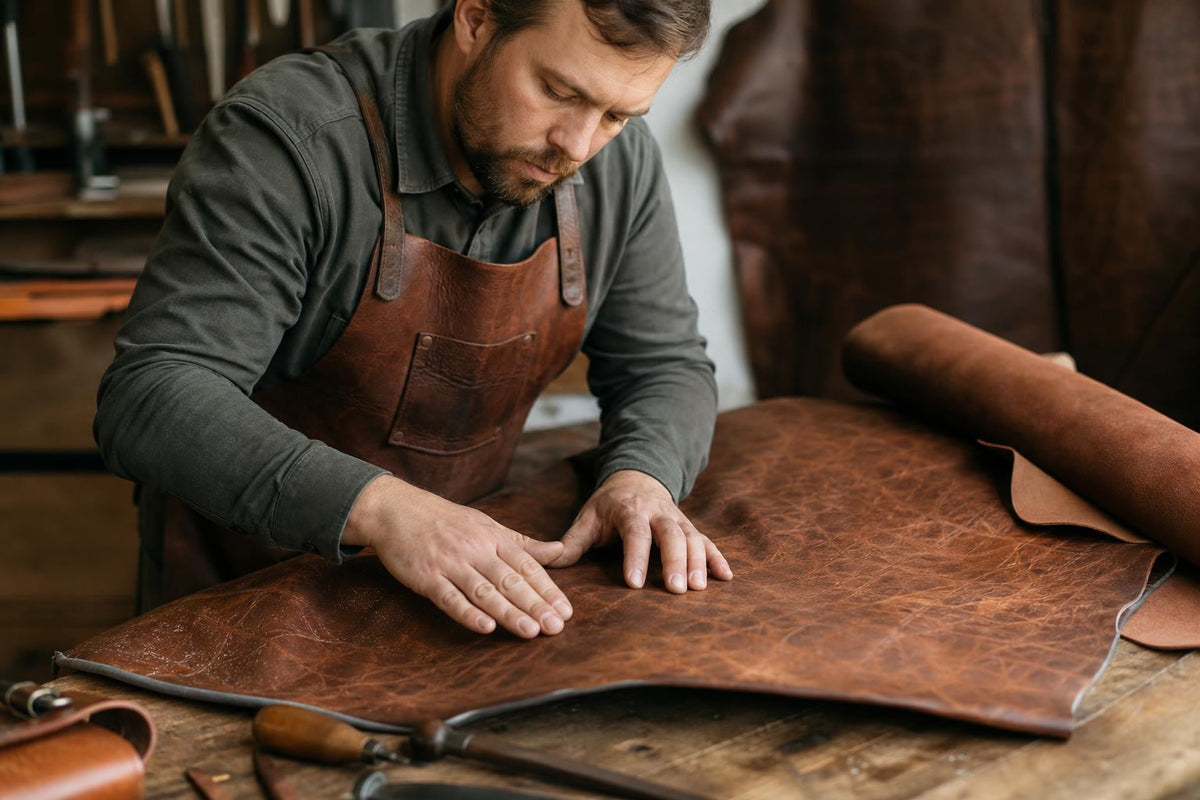
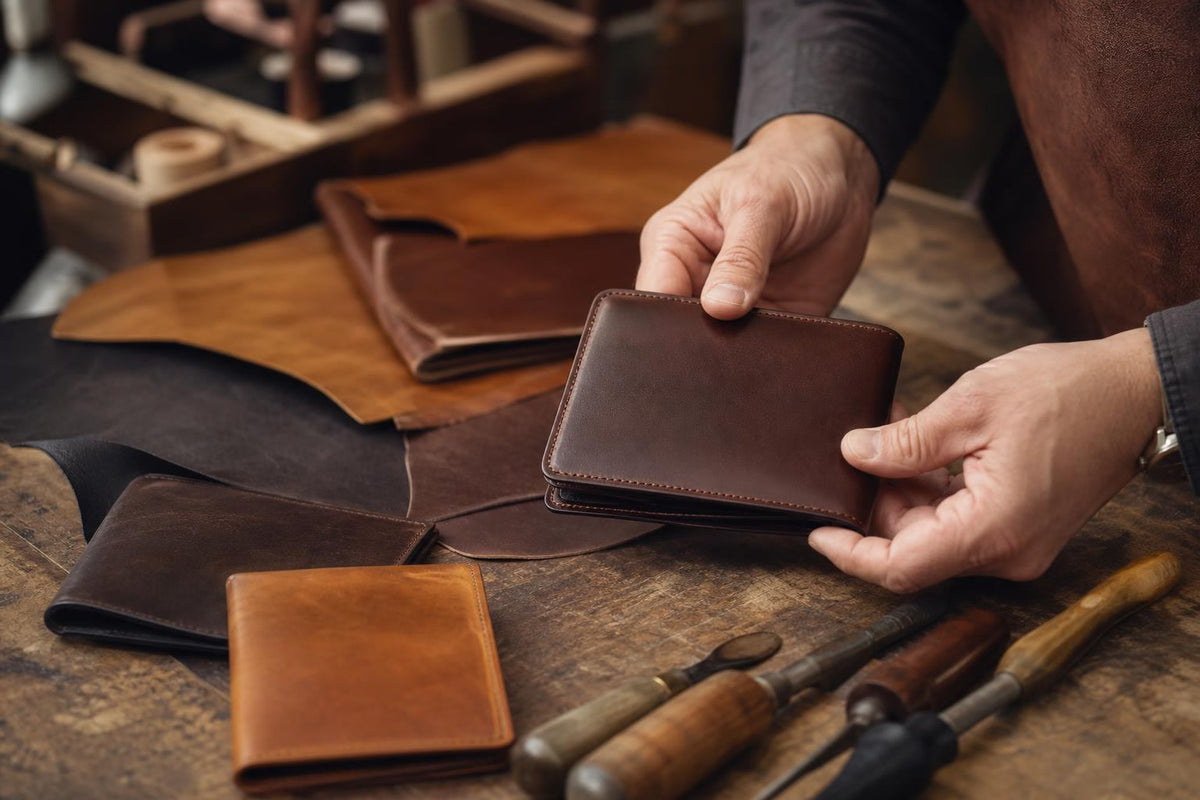
A craftsperson works the leather by hand using tools and techniques like sanding, cutting, burning, or scraping to bring out lighter colors and create natural-looking wear patterns. The process involves soaking the leather in water, then carefully manipulating it to produce unique marks and variations. Because every piece is worked individually, no two items look exactly the same.
Hand distressing is more labor-intensive and typically produces more nuanced, durable results. It also costs more, which is why hand-distressed goods carry a price premium.
Tannery Applied
Industrial distressing happens during the tanning and finishing stage. Hides are run through tumbling drums, treated with chemical washes, sanded by machine, or coated with wax and oil finishes that simulate years of wear. The results are more uniform and the process is faster, which makes tannery-distressed leather comparatively less expensive than hand-distressed pieces.
Common tannery techniques include:
- Tumbling in rotating drums to soften fibers and create natural creasing
- Sanding or buffing the surface to expose lighter tones beneath the dye
- Wax or oil saturation to create pull-up effects and tonal variation
- Chemical washes that strip or lighten surface color in controlled patterns
Types of Distressed Leather
Not all distressed leather looks or behaves the same way. Here are the five main sub-finishes you’ll encounter, each with a distinct visual character.
Pull-Up Leather
Pull-up leather is treated with oils or waxes that migrate through the hide. When you stretch, bend, or press the leather, the oils shift and the surface lightens in that area, creating a two-tone effect. This “pull-up” behavior is not a defect. It is the defining feature of this finish. Pull-up describes a finish behavior, not a specific animal or grade. It is most often full-grain or top-grain cowhide that has been drum-dyed and then heavily conditioned with a blend of waxes, oils, and sometimes greases.
Pull-up leather is popular for wallets, watch bands, and bags because the constant handling creates beautiful tonal shifts over time.
Crazy Horse Leather
Crazy Horse is a trade name for a rustic, wax-rich pull-up finish. When you fold, bend, or stretch the leather, the oils and waxes inside the hide shift and move, causing the stretched area to temporarily lighten in color. The result is a dramatic multi-tonal look that changes constantly with use. Crazy Horse leather tends to have the most pronounced vintage character of any distressed finish.
Crackled Leather
This leather is treated with a wax topcoat that cracks and separates as the leather flexes and stretches. The effect mimics decades of natural aging, creating a rugged, weathered appearance that works especially well on boots, belts, and structured bags.
Antique Leather
The hide is first soaked in oils to soften it, then manually buffed with sandpaper or another abrasive material. This creates uneven color distribution that mimics the look of a well-loved piece that has been used for years. Antique leather has a subtle, refined aging effect compared to the more dramatic Crazy Horse finish.
Tumbled Leather
Tumbled leather is mechanically softened by rotating in large drums, sometimes with added abrasives. The process breaks down the fiber structure slightly, producing a supple, relaxed hand feel with natural creasing patterns throughout the surface.
| Sub-Finish | Visual Effect | Typical Uses | Care Level |
|---|---|---|---|
| Pull-Up | Shifting light/dark tones when flexed | Wallets, bags, watch bands | Low (oils self-condition) |
| Crazy Horse | Dramatic, multi-tonal vintage look | Journals, bags, rugged accessories | Low |
| Crackled | Cracked wax topcoat, weathered texture | Boots, belts, structured bags | Medium |
| Antique | Subtle uneven color, refined aging | Furniture, dress accessories | Medium |
| Tumbled | Soft, naturally creased surface | Phone cases, jackets, soft goods | Low |
When choosing a leather watch band, pull-up and Crazy Horse finishes are popular choices because they develop visible character quickly from daily wrist contact.
Distressed Leather vs. Other Leather Types
The biggest source of confusion in leather shopping is mixing up grades and finishes. This table clarifies the differences.
| Feature | Distressed Leather | Full-Grain (Smooth) | Top-Grain | Faux Distressed |
|---|---|---|---|---|
| Material | Real animal hide | Real animal hide | Real animal hide | PU or PVC (plastic) |
| Surface | Intentionally aged, textured | Clean, natural grain | Sanded smooth, uniform | Printed/embossed texture |
| Develops Patina | Yes, often quickly | Yes, slowly | Somewhat | No |
| Durability | High (if full-grain base) | Highest | High | Low to moderate |
| Maintenance | Easy (scuffs blend in) | Moderate | Moderate | Low until it peels |
| Feel | Soft, broken-in from day one | Firm initially, softens over time | Smooth, consistent | Rubbery or plasticky |
| Price Range | Mid to high | High | Mid to high | Low |
The key takeaway: distressed leather and full-grain leather are not opposing categories. The best distressed leather is full-grain leather with a distressed finish. As one industry source puts it, “the key difference is finish, not material. Regular leather has a clean, polished surface. Distressed leather has a worked, characterful surface. Both are genuine animal-hide leather.”
For a deeper breakdown of how leather grades compare, full-grain sits at the top because its surface has not been sanded or corrected. When that premium surface is then distressed, you get the best of both worlds: structural integrity with visual character.
How to Tell Genuine Distressed Leather from Faux
Faux distressed leather has gotten convincing in recent years. These five tests will help you identify the real thing, whether you’re shopping in person or evaluating photos online.
The Touch Test. Real distressed leather feels warm to the touch and has an irregular, slightly rough texture. Faux leather feels cool, slick, or rubbery, with a uniformity that real hide never has.
The Smell Test. Genuine leather has an earthy, natural scent. Faux leather smells like plastic or chemicals, sometimes masked by artificial “leather scent” sprays that fade quickly.
The Water Test. Place a small drop of water on the surface. Genuine leather will absorb it within a few seconds. If the droplet sits on top and beads up, it is likely faux.
The Edge Test. Inspect the edges of the product. Real leather has porous, fibrous edges that soften with age. Faux leather edges appear smooth, rigid, and may eventually crack or delaminate.
The Pore Test. Look closely at the surface grain. Authentic leather has inconsistent surface grains and pores, with natural variation in pattern and spacing. Faux leather may have an embossed grain pattern, but it will be too perfect and repetitive to be real.
For a more detailed guide on applying these tests, check out our breakdown of how to tell real leather from synthetic alternatives.
How Distressed Leather Ages on Everyday Carry Items
This is where distressed leather really shines, and where most guides fall short. Nearly every article about distressed leather focuses on jackets and furniture. But some of the most interesting aging happens on items you touch constantly: phone cases, wallets, watch bands, and card holders.
Why Daily-Carry Items Patina Faster
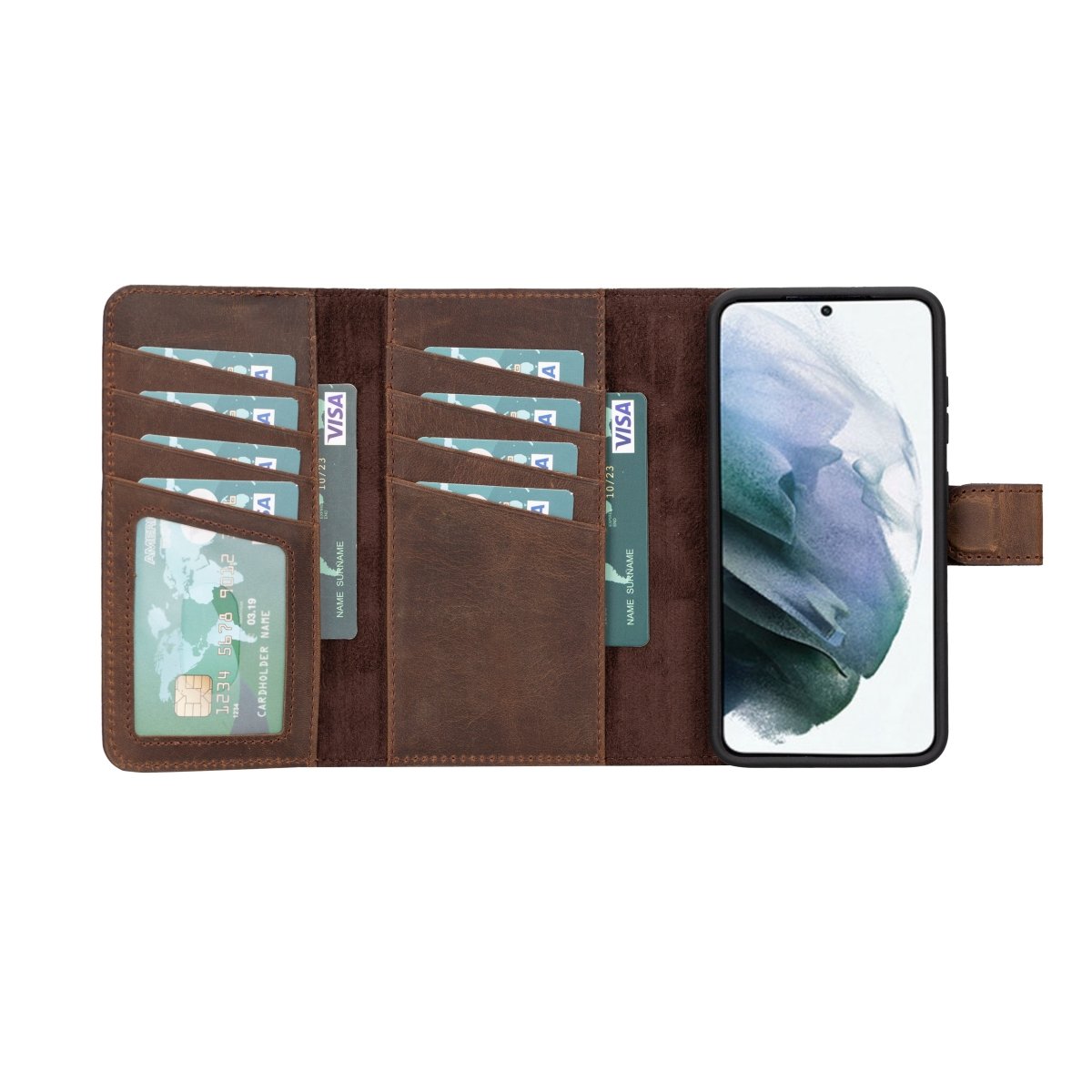
The oils from your hands accelerate patina development. A distressed leather phone case that lives in your pocket and gets handled dozens of times a day will develop noticeable character within weeks. For comparison, a distressed leather jacket worn a few times a week might take months to show the same level of change.
Distressed finishes in particular darken and show character quickly, producing a soft matte darkening effect. Smooth full-grain leather, by contrast, gains a slow, polished gloss. If you want an immediately lived-in look that keeps evolving, distressed finishes on daily-carry items are the fastest path there.
Base Grade Matters More Than You Think
Practitioners on Apple community forums have reported cases where supposed “leather” phone cases showed “no patina whatsoever” and the paint simply came off, exposing a different color underneath. That is not distressed leather aging poorly. That is faux or bonded leather failing to do what only real full-grain leather can do.
Authentic full-grain leather develops a natural patina as it ages, which serves as a mark of its authenticity. This process is highly valued in premium products because other types of leather simply don’t form a patina the same way. When you see a phone case or wallet that patinas beautifully, it is a clear signal of quality.
Explore how full-grain leather patinas on phone cases and accessories over time.
Color and Aging Behavior
Darker tones like rustic brown and black patina more gracefully, with the darkening effect blending smoothly into the existing color. Lighter colors can be striking but will show oil marks and hand contact more prominently. This is not damage; it is part of the leather’s story. But if you prefer a subtler aging process, stick with medium to dark tones for your first distressed leather piece.
Browse leather phone cases in a range of colorways to see how different tones look in distressed finishes.
How to Care for Distressed Leather
One of the practical advantages of distressed leather is that it is easier to maintain than smooth, polished leather. Minor scratches and scuffs blend right into the existing texture instead of standing out. That said, proper care will keep your distressed leather goods looking great for years.
Cleaning
Wipe with a soft, dry cloth to remove dust and surface dirt. For stains, use a slightly damp cloth and a mild leather cleaner.
Here is the counterintuitive tip most care guides miss: dab stains on distressed leather instead of wiping. Unlike smooth leather where you wipe spills away, wiping or rubbing distressed leather can push the stain deeper into the scars, creases, and texture lines, darkening the leather unevenly in that area. Gentle dabbing lifts the stain without forcing it into the surface.
Conditioning
Apply a quality leather conditioner every 6 to 12 months to keep the leather supple and prevent drying and cracking. Pull-up and Crazy Horse leathers need less frequent conditioning because they are already saturated with oils and waxes.
What to Avoid
Stay away from harsh chemicals, alcohol-based cleaners, and household cleaning products. These strip the leather’s natural oils and can cause irreversible drying and cracking. Avoid excess water, too. A light damp cloth is fine, but soaking distressed leather will damage the finish.
Storage
Store distressed leather items in a ventilated space. Avoid airtight containers or plastic bags, which can trap moisture and promote mildew growth. If storing for an extended period, stuff bags or cases lightly with tissue paper to help them hold their shape.
For specific guidance on caring for leather wearables, our guide on cleaning leather watch bands covers material-specific techniques.
Frequently Asked Questions
Is distressed leather real leather?
Yes. Distressed leather is genuine animal-hide leather (typically full-grain or top-grain cowhide) that has been treated to look aged. The “worn” appearance is a deliberate finish, not a sign of damage or inferior quality. Faux distressed leather, made from PU or PVC, is a different product entirely.
Is distressed leather durable?
When the base material is full-grain leather, distressed leather is highly durable. The distressing process may slightly reduce surface-level fiber integrity compared to untreated full-grain, but the overall durability remains excellent. In practice, distressed leather often feels more durable because scratches and scuffs simply add to its character instead of marring its appearance.
Does distressed leather crack?
Quality distressed leather that is properly maintained should not crack. Cracking typically results from prolonged dryness (lack of conditioning), exposure to harsh chemicals, or a low-quality base material. Regular conditioning every 6 to 12 months prevents this.
Can you distress leather yourself?
You can, though results vary widely depending on skill level and the leather you start with. Common DIY methods include sanding, rubbing with steel wool, applying rubbing alcohol to lighten color, and using heat tools. Starting with full-grain leather gives the best results. Attempting to distress bonded or faux leather will usually just destroy the surface coating.
Is distressed leather more expensive?
It depends on the method. Hand-distressed leather commands a premium because of the labor involved. Tannery-distressed leather, processed in bulk, is comparable in price to other finished leathers. The base grade (full-grain vs. top-grain vs. corrected) has a bigger impact on price than the distressing method itself.
Is distressed leather good for phone cases?
It is an excellent choice. Phone cases made from distressed full-grain leather develop patina faster than almost any other leather accessory because of the constant hand contact. The result is a case that looks increasingly personal and unique over time. The soft, broken-in texture also provides a comfortable grip from day one, with no stiff break-in period.
How is distressed leather different from vintage leather?
“Vintage leather” usually refers to leather that has aged naturally over years of use. “Distressed leather” refers to leather where that aging has been accelerated through intentional treatment. The end result looks similar, but vintage leather earned its character over time while distressed leather was manufactured to have it immediately. Some distressed leather will continue to develop genuine vintage character with use, especially if the base is full-grain.
Does distressed leather patina?
Yes, and often faster than smooth-finished leather. The surface texture, combined with oils and waxes used in the distressing process, responds readily to hand oils, sunlight, and friction. On items like phone cases and wallets that see daily handling, visible patina changes can appear within just a few weeks.


Leave a comment
This site is protected by hCaptcha and the hCaptcha Privacy Policy and Terms of Service apply.